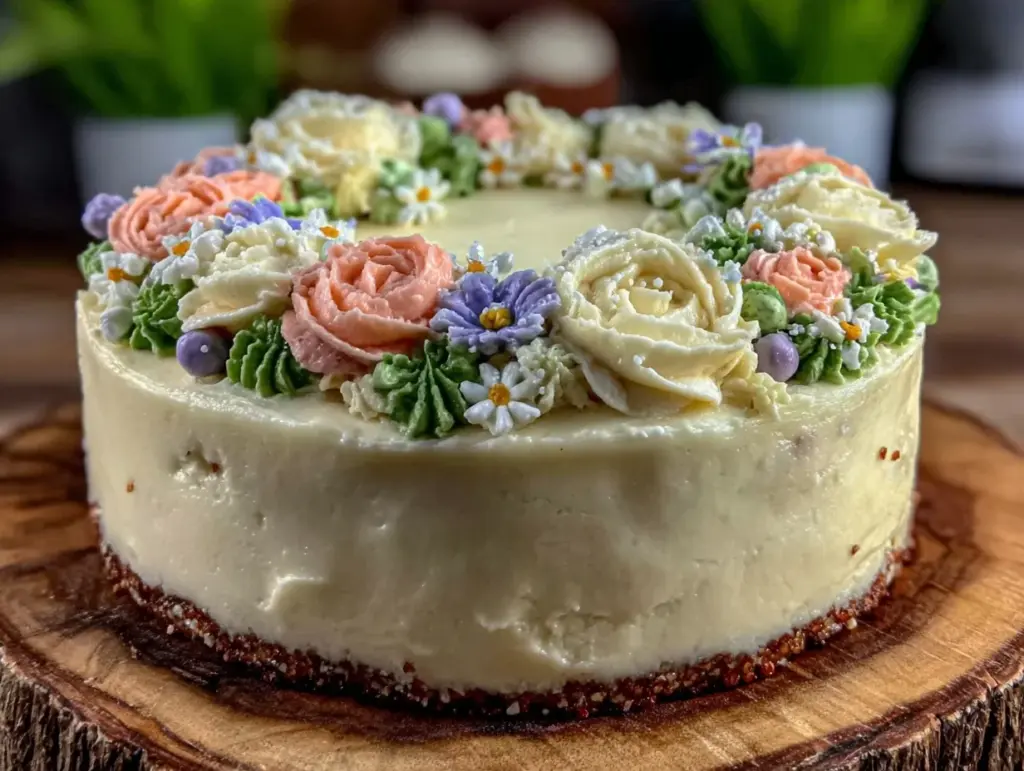
“I wasn’t expecting to become obsessed with decorating cakes,” my neighbor Linda confessed last spring as she handed me a slice of what looked like a blooming garden on a plate. It was pastel petals and swirls, a day-brightener for sure. The secret? Buttercream blooms that felt so delicate you almost didn’t want to eat them—almost. That afternoon, while the sun spilled through the lace curtains, I was hooked. The Perfect Spring Flower Garden Cake with Buttercream Blooms became my unexpected spring ritual.
Honestly, the first time I tried making it, I forgot to add the baking powder, and the cake turned out denser than I wanted. But somehow, the flowers hid the flaw and made the whole thing a winner at our Sunday gathering. Maybe you’ve been there—rushing in the kitchen, juggling too many things, yet creating something that feels like a small masterpiece. This cake isn’t just about taste; it’s about the joy of crafting something that looks like a fresh garden, right on your table.
What makes this recipe stick with me is how it captures the essence of spring—the gentle colors, the soft textures, the way the buttercream feels like petals melting on your tongue. You don’t need to be a pro baker or have fancy tools to make this happen. Let me tell you, I’ve baked this on a cramped counter with only three mixing bowls and a borrowed piping bag, and it still came out stunning. So, if you’re craving a cake that’s as much a feast for the eyes as it is for the palate, this could be your new go-to. Ready to bring a bit of spring into your kitchen?
Why You’ll Love This Recipe
This Perfect Spring Flower Garden Cake recipe has become a favorite for so many reasons, and I’m excited to share why it might just be your next baking obsession:
- Quick & Easy: The cake layers come together in under 45 minutes, leaving room for the fun part—decorating with buttercream blooms.
- Simple Ingredients: No need for specialty stores; most ingredients are pantry staples. I always keep a good quality unsalted butter (I recommend Plugrá for creaminess) and pure vanilla extract on hand.
- Perfect for Spring Celebrations: Whether it’s a garden party, Mother’s Day brunch, or an afternoon tea, this cake fits beautifully.
- Crowd-Pleaser: Kids and adults alike marvel at the delicate floral design and moist crumb. My niece asked for it at her birthday last year, and guests couldn’t stop complimenting it.
- Unbelievably Delicious: The balance of a tender vanilla sponge and buttery, subtly sweet frosting makes every bite a little moment of happiness.
What sets this cake apart is the buttercream technique—soft, smooth, and perfect for creating petals that hold their shape without feeling heavy. I learned a neat trick from a local pastry chef to chill the piping bag slightly before decorating. It’s a game-changer that keeps the blooms crisp and vibrant. Plus, the recipe’s adaptable—you can tweak colors to match your party theme or season without missing a beat.
So, if you’ve ever felt intimidated by cake decorating, this recipe offers a friendly introduction with rewarding results. It’s the kind of cake that makes you want to pause, take a photo, and savor the moment before digging in. Trust me, once you try it, you’ll find yourself looking for reasons to bake it again.
What Ingredients You Will Need
This recipe uses simple, wholesome ingredients to deliver bold flavor and satisfying texture without the fuss. Most are pantry staples, and the buttercream blooms come alive with a few carefully chosen extras. Here’s the lineup:
- For the Cake Layers:
- All-purpose flour – 2 ½ cups (320 g), sifted for a tender crumb
- Baking powder – 2 ½ teaspoons, to help it rise nicely
- Salt – ½ teaspoon, balances sweetness
- Unsalted butter – 1 cup (226 g), softened (I recommend Plugrá or Kerrygold for richness)
- Granulated sugar – 1 ¾ cups (350 g), for just the right sweetness
- Large eggs – 4, room temperature (helps with smooth batter)
- Pure vanilla extract – 2 teaspoons, quality matters here for flavor depth
- Whole milk – 1 cup (240 ml), room temperature (you can swap for almond milk if preferred)
- For the Buttercream Blooms:
- Unsalted butter – 1 cup (226 g), softened (again, quality butter makes a difference)
- Powdered sugar – 4 cups (480 g), sifted to avoid lumps
- Heavy cream – 2-3 tablespoons (30-45 ml), for smoothness
- Vanilla extract – 1 teaspoon
- Gel food coloring – assorted pastel shades (I love AmeriColor gels for vibrant colors without watering down the buttercream)
- Optional Garnishes:
- Edible pearls or sprinkles for extra charm
- Fresh edible flowers like pansies or violets (make sure they’re pesticide-free!)
- Two 8-inch (20 cm) round cake pans – Non-stick is great, but lined with parchment paper works well too
- Mixing bowls – At least two; one for dry ingredients and one for wet
- Electric mixer – Stand or hand mixer; it speeds things up and gives the buttercream that perfect fluffiness
- Spatulas – One rubber for folding and one offset spatula for frosting
- Piping bags – Disposable or reusable; I like reusable for less waste
- Assorted piping tips – Petal tips (#104 or #127) for the flowers, leaf tips (#352) for greenery, and round tips (#3 or #4) for dots and centers
- Turntable (optional) – Makes frosting and decorating easier, but you can manage without
- Cooling racks – To let your cake layers rest evenly
- Preheat and Prepare Pans: Set your oven to 350°F (175°C). Grease two 8-inch round cake pans and line the bottoms with parchment paper. This helps the cake release perfectly. Allow the pans to warm slightly on the counter while you prepare the batter.
- Mix Dry Ingredients: In a medium bowl, sift together 2 ½ cups (320 g) all-purpose flour, 2 ½ teaspoons baking powder, and ½ teaspoon salt. Set aside.
- Cream Butter and Sugar: In a large bowl, beat 1 cup (226 g) softened unsalted butter with 1 ¾ cups (350 g) granulated sugar on medium speed until light and fluffy, about 3-4 minutes. This step is key for a tender crumb and airy texture.
- Add Eggs and Vanilla: Crack in 4 large eggs one at a time, beating well after each addition. Then stir in 2 teaspoons pure vanilla extract. The batter should look smooth and glossy.
- Alternate Dry Ingredients and Milk: Reduce mixer speed to low. Add the dry ingredients in three additions, alternating with 1 cup (240 ml) whole milk (start and end with flour). Mix until just combined—overmixing can make the cake tough.
- Divide and Bake: Pour batter evenly into the prepared pans. Tap the pans gently on the counter to release air bubbles. Bake for 30-35 minutes, or until a toothpick inserted in the center comes out clean. The edges will start to pull away slightly.
- Cool: Let cakes cool in pans for 10 minutes, then turn out onto wire racks to cool completely. This is important before frosting; warm cake will melt the buttercream.
- Make Buttercream: Beat 1 cup (226 g) softened unsalted butter on medium speed until creamy. Gradually add 4 cups (480 g) sifted powdered sugar, alternating with 2-3 tablespoons (30-45 ml) heavy cream, until you reach a spreadable consistency. Stir in 1 teaspoon vanilla extract.
- Color Your Buttercream: Divide buttercream into separate bowls. Add gel food coloring a little at a time until you achieve soft pastel shades perfect for spring blooms.
- Assemble and Crumb Coat: Place one cake layer on your serving plate or turntable. Spread a thin layer of buttercream on top. Add the second layer and apply a thin crumb coat all over the cake. Chill for 20 minutes to set.
- Pipe Buttercream Blooms: Fit your piping bags with petal tips and fill with colored buttercream. Hold bag at a 45-degree angle, moving in small arcs to create petals. Use leaf tips for greenery and round tips for flower centers or dots. Take your time – imperfections add charm!
- Final Chill: Refrigerate the decorated cake for 30 minutes to allow buttercream to firm up before serving.
- Room Temperature Ingredients: Let eggs, butter, and milk sit out for at least 30 minutes. Cold ingredients can cause the batter to curdle or not mix evenly.
- Cream Butter and Sugar Well: Don’t rush this step. Creaming for 3-5 minutes introduces air, making your cake lighter and fluffier.
- Don’t Overmix: Once you add the flour, mix only until combined. Overmixing develops gluten, leading to a dense cake.
- Test for Doneness: Use a toothpick or cake tester. If it comes out with just a few moist crumbs, it’s ready. Overbaking dries the cake.
- Buttercream Consistency: If your buttercream is too stiff, add a bit more heavy cream (one teaspoon at a time). Too soft? Add a little more powdered sugar.
- Chill Between Steps: Crumb coating and chilling before decorating prevents crumbs from mixing with your final frosting layer.
- Piping Angle and Pressure: Hold the piping bag at about 45 degrees. Use consistent pressure while moving your hand in gentle arcs to mimic petals.
- Practice Makes Perfect: Don’t worry if your first blooms aren’t flawless—each cake teaches you something new.
- Flavor Variations: Swap vanilla extract for almond or lemon extract for a fresh twist. Adding lemon zest to the batter brightens the flavor instantly.
- Diet-Friendly Options: Use gluten-free flour blends for a gluten-free cake. For a lower sugar option, try reducing the sugar by ¼ cup (50 g) and balancing with a teaspoon of vanilla bean paste for richness.
- Buttercream Alternatives: Try cream cheese frosting for tangy blooms or a coconut whipped cream for a lighter, dairy-free topping.
- Seasonal Themes: Change your buttercream colors to match other seasons—rich reds and golds for fall, icy blues and whites for winter.
- Decorating Techniques: Instead of flowers, pipe rosettes or stars for a different look. Or add fresh fruit like raspberries or blueberries atop the cake for an extra pop.
For substitutions, if you’re aiming for a dairy-free version, swap the butter with a plant-based margarine that whips well and use coconut or soy milk in place of regular milk. For a gluten-free twist, try a 1-to-1 gluten-free flour blend, but keep in mind the texture might vary slightly.
Pro tip: When choosing your butter, avoid salted varieties to keep control over flavor. And if you want a more intense vanilla aroma, try using vanilla bean paste instead of extract. It’s a small detail but really lifts the cake.
Equipment Needed
Getting your tools ready makes baking this spring cake smoother than you’d think. Here’s what you’ll want:
If you don’t have a turntable, a lazy Susan or even a plate you can spin gently works just fine. For piping bags, a zip-top bag with a snipped corner can be a last-minute lifesaver, though shaping petals is easier with proper tips.
Maintenance tip: Wash your piping tips immediately after use with warm, soapy water to prevent buttercream buildup — it saves you the frustration later. And if your mixer bowls aren’t stainless steel, avoid beating butter directly in plastic bowls as they can retain odors or colors.
Preparation Method
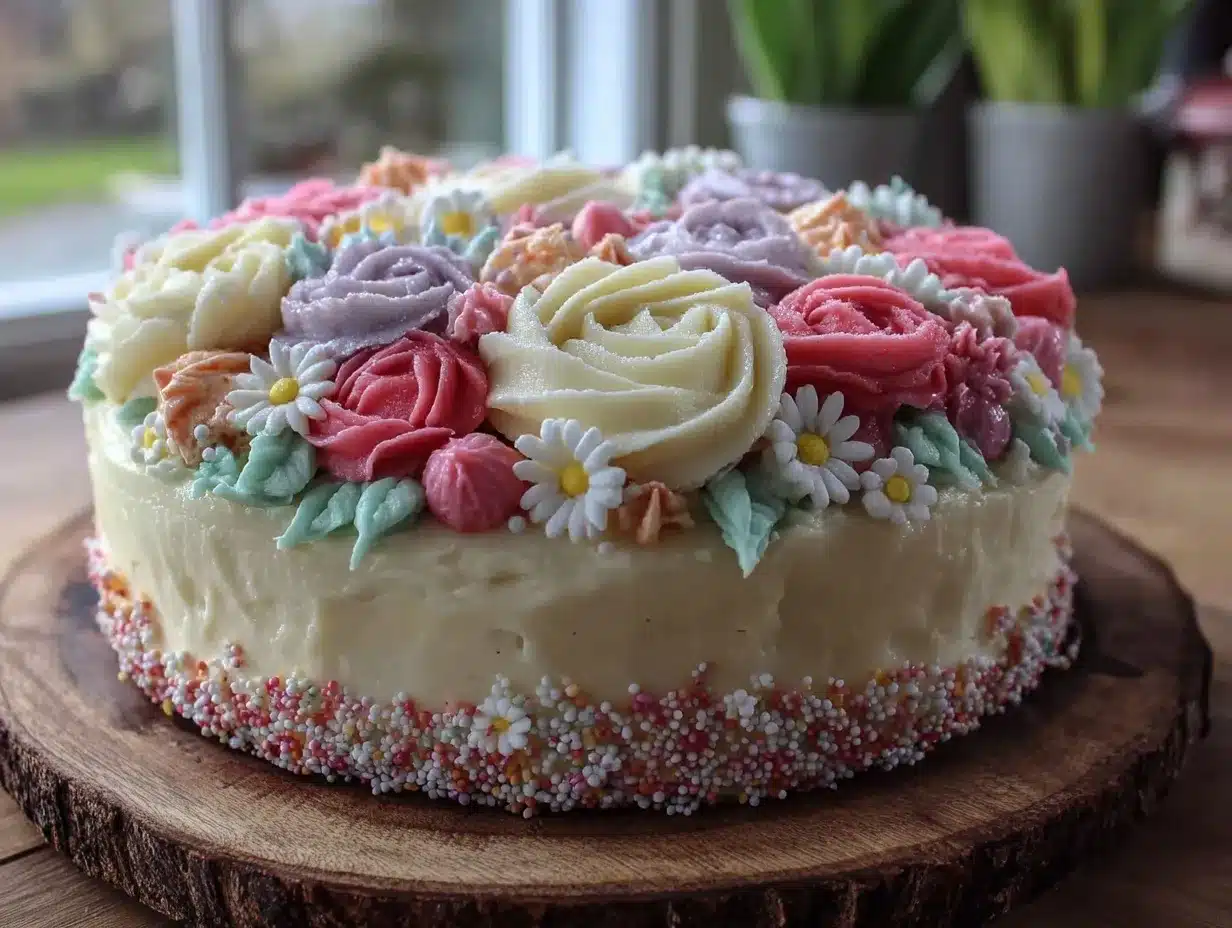
Quick tip: If the buttercream feels too soft while piping, pop the piping bag in the fridge for 10 minutes. This helps the petals hold their shape without melting.
And remember, it’s okay if your flowers aren’t perfect. I once made a batch where my piping bag burst mid-bloom—messy, but the cake still looked gorgeous and tasted divine!
Cooking Tips & Techniques
Getting the Perfect Spring Flower Garden Cake just right takes a few handy tricks:
Funny story: I once tried to speed things up by skipping the crumb coat. Big mistake. Crumbs got everywhere, and I spent double the time cleaning up. Lesson learned—patience pays off!
Variations & Adaptations
Want to switch things up? Here are some ways to customize your Perfect Spring Flower Garden Cake:
Personally, I once made this cake with lavender-infused buttercream—just steep a teaspoon of dried culinary lavender in warm cream before whipping. The subtle floral note was a hit at a garden party, and guests kept asking for the recipe!
Serving & Storage Suggestions
Serve your Spring Flower Garden Cake at room temperature for the best texture and flavor. The buttercream softens slightly, making each bite melt in your mouth. I like to slice it with a sharp serrated knife, wiping the blade clean between cuts to keep those pretty layers intact.
This cake pairs beautifully with light beverages like chamomile tea, a crisp lemonade, or a sparkling rosé for an adult gathering. For a cozy afternoon, a cup of Earl Grey or a mild coffee complements the vanilla notes perfectly.
To store, keep the cake covered in the refrigerator for up to 3 days. Bring it back to room temperature for about 30 minutes before serving to soften the buttercream. For longer storage, wrap tightly and freeze for up to 2 months. Thaw overnight in the fridge, then bring to room temperature as usual.
Flavors often deepen after a day, so if you can resist, the next-day taste is even better. Just don’t wait too long—this cake’s charm is in its fresh, delicate bloom.
Nutritional Information & Benefits
| Nutrient | Per Serving (1 slice) |
|---|---|
| Calories | 350 kcal |
| Fat | 18 g |
| Saturated Fat | 10 g |
| Carbohydrates | 45 g |
| Sugar | 30 g |
| Protein | 4 g |
| Fiber | 1 g |
The cake’s key ingredients deliver more than just flavor. Eggs provide protein and essential nutrients like vitamin D and choline. Butter offers fat-soluble vitamins A and E, which are important for skin and immune health. Using whole milk adds calcium and vitamin B12. The powdered sugar and white flour are less nutrient-dense, so this cake is best enjoyed as an occasional treat.
For those mindful of allergens, this recipe contains gluten, dairy, and eggs. Substitutions are possible for dairy and gluten-free options, but eggs can be trickier—flax or chia eggs can work but may change texture slightly.
Overall, this cake strikes a balance between indulgence and homey nourishment, perfect for sharing the joy of springtime flavors with loved ones.
Conclusion
Why settle for ordinary when you can bring a little garden magic to your table? This Perfect Spring Flower Garden Cake with Buttercream Blooms is not just a dessert; it’s a celebration of color, texture, and simple pleasures. Whether you’re an experienced baker or just starting out, the recipe invites you to enjoy the process as much as the result.
Feel free to make it your own—try different flavors, colors, or decorating styles. I love how each cake tells a new story, and I can’t wait to hear yours. Maybe you’ll find yourself baking this on a sunny weekend, or gifting it to someone special (I promise they’ll be impressed!).
Give it a go, and don’t forget to share your photos or tips in the comments below. I’m always thrilled to see how this cake blooms in your kitchens!
FAQs
Can I make this cake ahead of time?
Yes! Bake the cake layers up to 2 days in advance and store wrapped tightly at room temperature. Assemble and decorate the day you plan to serve for the freshest buttercream blooms.
What if I don’t have gel food coloring?
You can use liquid food coloring, but add it sparingly to avoid thinning your buttercream. Gel colors provide more vibrant hues without affecting consistency.
How do I prevent my buttercream from melting?
Keep the room cool and avoid overhandling the buttercream. Chilling the piping bag briefly before decorating helps keep petals firm.
Can I freeze the decorated cake?
It’s best to freeze undecorated cake layers. Buttercream decorations can be frozen but may soften and lose shape upon thawing.
What’s the best way to clean my piping tips?
Soak them in warm, soapy water immediately after use, then use a small brush or toothpick to clear any clogging. Dry thoroughly before storing.
Pin This Recipe!
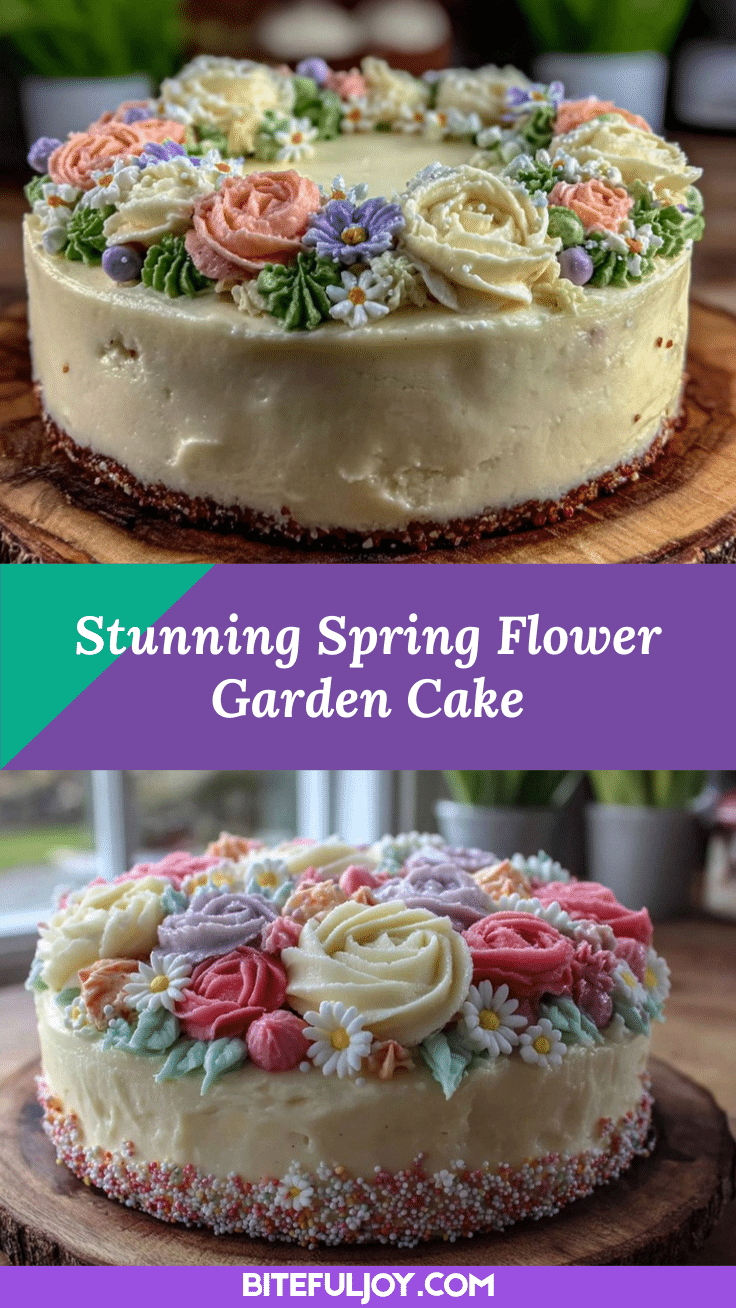
Perfect Spring Flower Garden Cake Recipe Easy Buttercream Blooms Tutorial

A delightful vanilla sponge cake decorated with delicate buttercream blooms, perfect for spring celebrations and garden parties. This recipe combines simple pantry ingredients with a beautiful floral design that is both a feast for the eyes and the palate.
- Prep Time: 15 minutes
- Cook Time: 30-35 minutes
- Total Time: 50 minutes
- Yield: 12 servings 1x
- Category: Dessert
- Cuisine: American
Ingredients
- 2 ½ cups (320 g) all-purpose flour, sifted
- 2 ½ teaspoons baking powder
- ½ teaspoon salt
- 1 cup (226 g) unsalted butter, softened
- 1 ¾ cups (350 g) granulated sugar
- 4 large eggs, room temperature
- 2 teaspoons pure vanilla extract
- 1 cup (240 ml) whole milk, room temperature
- 1 cup (226 g) unsalted butter, softened (for buttercream)
- 4 cups (480 g) powdered sugar, sifted
- 2–3 tablespoons (30–45 ml) heavy cream
- 1 teaspoon vanilla extract (for buttercream)
- Gel food coloring, assorted pastel shades
- Optional garnishes: edible pearls or sprinkles, fresh edible flowers (pansies or violets)
Instructions
- Preheat oven to 350°F (175°C). Grease two 8-inch round cake pans and line bottoms with parchment paper.
- In a medium bowl, sift together flour, baking powder, and salt. Set aside.
- In a large bowl, beat softened butter and granulated sugar on medium speed until light and fluffy, about 3-4 minutes.
- Add eggs one at a time, beating well after each addition. Stir in vanilla extract.
- Reduce mixer speed to low. Add dry ingredients in three additions, alternating with milk, starting and ending with flour. Mix until just combined.
- Divide batter evenly into prepared pans. Tap pans gently to release air bubbles.
- Bake for 30-35 minutes or until a toothpick inserted in the center comes out clean.
- Cool cakes in pans for 10 minutes, then turn out onto wire racks to cool completely.
- For buttercream, beat softened butter until creamy. Gradually add powdered sugar, alternating with heavy cream, until spreadable consistency is reached. Stir in vanilla extract.
- Divide buttercream into bowls and add gel food coloring to achieve pastel shades.
- Place one cake layer on serving plate or turntable. Spread a thin layer of buttercream on top. Add second layer and apply a thin crumb coat all over the cake. Chill for 20 minutes.
- Fit piping bags with petal, leaf, and round tips. Pipe buttercream blooms holding bag at 45-degree angle, moving in small arcs to create petals and leaves.
- Refrigerate decorated cake for 30 minutes to firm buttercream before serving.
Notes
Use room temperature ingredients for best results. Chill piping bag briefly if buttercream is too soft to help petals hold shape. Avoid overmixing batter to keep cake tender. Clean piping tips immediately after use to prevent buildup. For dairy-free or gluten-free versions, substitute ingredients accordingly but note texture changes.
Nutrition
- Serving Size: 1 slice
- Calories: 350
- Sugar: 30
- Fat: 18
- Saturated Fat: 10
- Carbohydrates: 45
- Fiber: 1
- Protein: 4
Keywords: spring cake, buttercream blooms, vanilla sponge cake, cake decorating, easy cake recipe, floral cake, garden party dessert