Let me tell you, there’s something about the crisp pop of a champagne cork mingling with the zesty aroma of fresh oranges that instantly lifts the spirit. That first sip of a refreshing Easter mimosa feels like sunshine captured in a glass—bright, bubbly, and downright joyful. The first time I made these for an Easter brunch years ago, I was instantly hooked. It was one of those moments where you pause, take a deep breath, and just smile because you know you’re onto something truly special.
When I was knee-high to a grasshopper, Easter meant a big family brunch filled with laughter, pastel colors, and homemade treats. But honestly, the drinks were usually the last thing on my mind—until I stumbled upon this recipe on a rainy weekend, trying to recreate that perfect brunch vibe. My family couldn’t stop sneaking these refreshing Easter mimosas off the table (and I can’t really blame them).
These mimosas are dangerously easy to whip up and bring pure, nostalgic comfort while adding a little sparkle to your celebration. Perfect for potlucks, sweet treats for your kids’ grown-up friends, or just brightening up your Pinterest brunch board, this recipe has become a staple for family gatherings and gifting in my home. After testing it multiple times in the name of research, of course, I can say with confidence you’re going to want to bookmark this one.
Why You’ll Love This Recipe
Honestly, refreshing Easter mimosas are the kind of drink that’s as simple as it is stunning. Here’s why this recipe has become my go-to for bright brunch celebrations:
- Quick & Easy: Comes together in under 10 minutes, perfect for busy Easter mornings or last-minute guests.
- Simple Ingredients: No fancy grocery runs—just fresh orange juice, sparkling wine, and a splash of springtime sweetness.
- Perfect for Brunch: Adds that festive sparkle to any table, from casual family meals to fancy gatherings.
- Crowd-Pleaser: Always gets rave reviews from kids and adults alike, with options to keep it alcohol-free.
- Unbelievably Delicious: The balance of citrus zing and bubbly effervescence is downright addictive.
This isn’t just another mimosa recipe—it’s the best version I’ve found, thanks to the splash of homemade citrus syrup that brings a fresh twist and perfectly balanced sweetness. After all, mimosas should make you close your eyes after the first sip, right? This recipe feels like comfort food in a glass—only brighter, fresher, and ready to impress without any stress.
What Ingredients You Will Need
This recipe uses simple, wholesome ingredients to deliver bold flavor and a satisfying fizz without the fuss. Most of these are pantry staples or easy to find at the market during spring.
- Fresh orange juice: About 2 cups (480 ml), freshly squeezed for best flavor (bottled works if you’re in a pinch).
- Chilled sparkling wine or champagne: 1 bottle (750 ml), Brut or Extra Dry works perfectly (I like Veuve Clicquot for a smooth finish).
- Citrus simple syrup: ½ cup (120 ml) sugar, ½ cup (120 ml) water, zest of 1 orange and 1 lemon (adds brightness and depth).
- Fresh orange slices: For garnish, thinly sliced (adds a festive touch!).
- Fresh mint sprigs: Optional, for garnish and subtle herbal note.
- Sparkling water or club soda: Optional, for lightening up or making a non-alcoholic version.
- Alcohol-free sparkling wine or white grape juice: For a kid-friendly or mocktail variation.
For the citrus simple syrup, I recommend using organic citrus if you can get it—makes a world of difference! If you want to switch things up, try swapping the orange juice for blood orange or tangerine juice in season. And if you prefer a less sweet mimosa, adjust the syrup amount or skip it altogether for a more traditional feel.
Equipment Needed
- Citrus juicer: Manual or electric, to extract fresh juice easily (a handheld reamer works fine too).
- Small saucepan: For making the citrus simple syrup.
- Measuring cups and spoons: For precise ingredient ratios.
- Champagne flutes or clear glasses: To show off that beautiful bubbly color.
- Mixing pitcher: To combine the juice and syrup before adding the sparkling wine.
- Optional strainer: To catch any pulp if you prefer a smooth drink.
If you don’t have a citrus juicer, no worries! I’ve squeezed oranges by hand plenty of times—just be ready for a little mess. For champagne flutes, clear stemless glasses work great and are more casual for a family-friendly vibe. The small saucepan is best for syrup-making, but a microwave can be a shortcut (just watch closely!).
Preparation Method
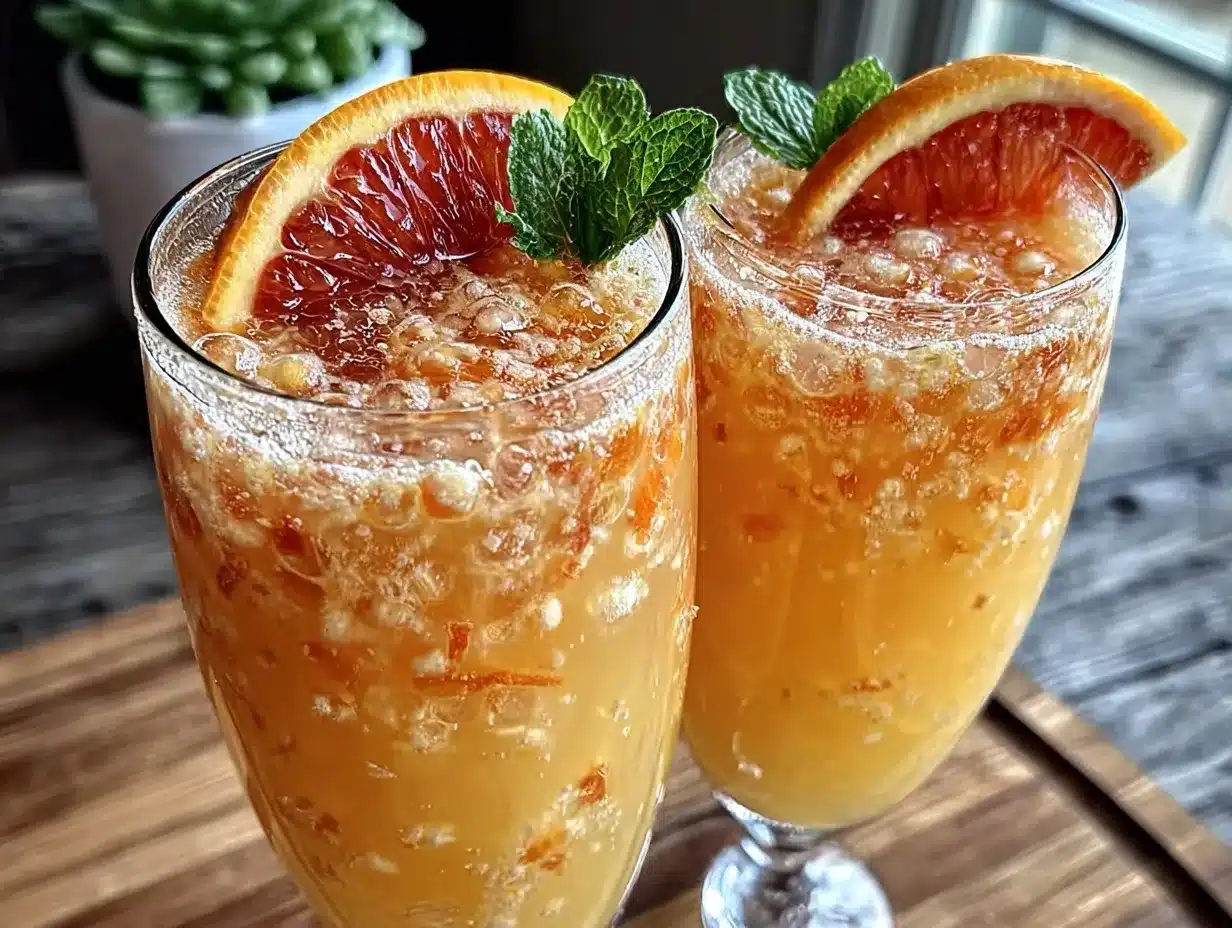
- Make the citrus simple syrup: In a small saucepan, combine ½ cup (120 ml) sugar, ½ cup (120 ml) water, and the zest of one orange and one lemon. Heat over medium, stirring until sugar dissolves. Let it simmer gently for 2-3 minutes. Remove from heat and let cool completely. (This syrup is the magic touch that brightens the mimosa.)
- Juice the oranges: You’ll need about 2 cups (480 ml) of fresh orange juice. Strain if you want to skip the pulp. Fresh juice is key here for that authentic citrus punch.
- Combine juice and syrup: In a large mixing pitcher, stir together the fresh orange juice and cooled citrus syrup. Taste and adjust sweetness if needed. Remember, you want a balance—bright but not syrupy.
- Chill the mixture: Pop the pitcher into the fridge for at least 30 minutes to get everything nicely cold.
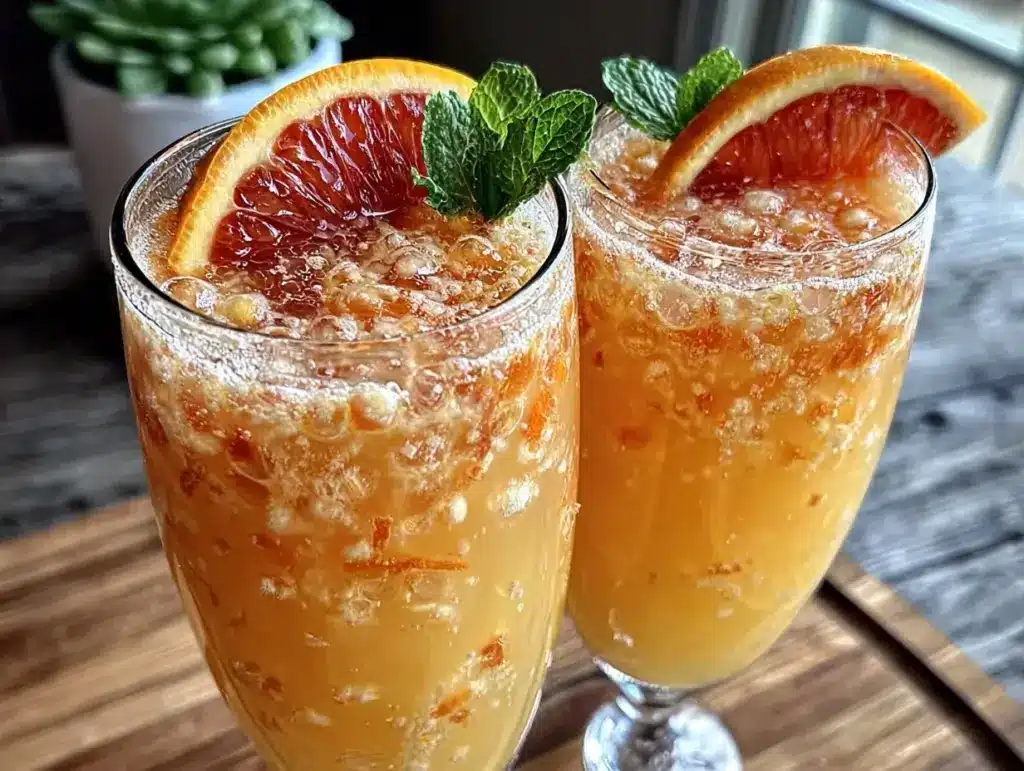
- Prepare the glasses: Place an orange slice and a sprig of fresh mint in each champagne flute for a festive look.
- Pour and top: Fill each glass about halfway with the orange juice mixture. Slowly top with chilled sparkling wine (about 4 ounces / 120 ml per glass). Pour gently to keep those bubbles alive!
- Optional tweaks: For a lighter mimosa, add a splash of sparkling water. For a mocktail, replace sparkling wine with alcohol-free sparkling wine or white grape juice.
- Serve immediately: Mimosas are best enjoyed fresh—those bubbles won’t wait around!
Pro tip: If you’re making a big batch, keep the sparkling wine chilled separately and add it just before serving to avoid flat drinks. Also, don’t forget to chill your glasses ahead of time if you want that extra touch of cool sophistication.
Cooking Tips & Techniques
One trick I learned the hard way is to never pour sparkling wine too fast. You want to preserve the bubbles—that’s half the fun of a mimosa. Pour slowly down the side of the glass to keep it lively.
Another tip: Always use fresh orange juice. Bottled juice can work, sure, but fresh juice has that zesty tang that makes a mimosa sing. If you don’t have a juicer, roll the oranges on the counter a bit before cutting to get more juice out.
Making the citrus simple syrup from scratch is a game changer. It’s worth the extra 10 minutes because it adds layers of flavor you won’t find in plain sugar. I usually make a batch ahead and keep it in the fridge for up to a week.
Don’t forget to chill your sparkling wine and glasses well. Warm glasses or wine can kill the fizz and dull the flavor.
Lastly, when mixing, gently stir the juice and syrup before topping with sparkling wine to avoid losing the bubbles prematurely. Trust me, it pays off!
Variations & Adaptations
This refreshing Easter mimosas recipe is a breeze to tweak for different tastes and dietary needs.
- Non-alcoholic version: Swap sparkling wine for sparkling water or alcohol-free sparkling grape juice. Keeps all the fizz without the buzz.
- Fruit twist: Try adding a splash of fresh strawberry or peach puree for a fruity punch that’s perfect for springtime.
- Herbal notes: Infuse the simple syrup with fresh herbs like rosemary or basil during heating for a subtle, fragrant complexity.
- Low-sugar option: Reduce the syrup amount or use a natural sweetener like honey or agave, adjusting to taste.
- Seasonal swaps: Use blood orange or grapefruit juice in place of regular orange juice for a dramatic color and flavor boost.
One personal favorite is adding a splash of elderflower liqueur for a floral twist—it’s like spring in a glass! Just a little something to impress your brunch guests while keeping things easy.
Serving & Storage Suggestions
Serve your refreshing Easter mimosas chilled, straight from the fridge, and always in a clear glass to show off that golden sparkle. Garnish with a thin orange slice and a mint sprig for a festive, inviting look.
These drinks pair beautifully with light brunch fare—think fresh fruit salad, buttery croissants, or fluffy scrambled eggs. For beverages, iced coffee or herbal teas complement the citrus notes well.
If you need to prep ahead, mix the orange juice and citrus syrup and keep it refrigerated up to 24 hours. Add sparkling wine just before serving to preserve bubbles. Leftover mimosas aren’t great once mixed, but the juice mixture can be saved.
Refrigerate the juice mix in a sealed container and give it a quick stir before serving. Flavors tend to meld and brighten after a few hours, so sometimes prepping in advance actually improves the taste.
Nutritional Information & Benefits
One glass of these refreshing Easter mimosas clocks in around 120-150 calories depending on the sparkling wine and syrup amount used. They’re relatively light compared to heavier cocktails, making them a brunch-friendly choice.
Fresh orange juice packs a punch of vitamin C and antioxidants, giving your morning a little health boost alongside the fun. Plus, the homemade simple syrup lets you control the sweetness and avoid unnecessary additives found in store-bought mixes.
For those watching carbs or sugar, adjusting the syrup or opting for sugar-free sweeteners can help keep this drink on the lighter side. And of course, the non-alcoholic version is a great option for all ages and dietary preferences.
Conclusion
Refreshing Easter mimosas are more than just a drink—they’re a little celebration in every glass. They bring a bright, bubbly spirit to your brunch table, making any gathering feel special without any fuss. The balance of fresh citrus, subtle sweetness, and sparkling bubbles is a recipe for smiles all around.
Feel free to customize this recipe to suit your taste or dietary needs—whether that’s dialing back sweetness, adding seasonal fruit, or going alcohol-free. Personally, I love how adaptable and foolproof this recipe is. It’s become a beloved tradition in my family, and I hope it will be for you too.
Give these mimosas a try this Easter, and don’t forget to share your twists and stories in the comments below. Cheers to bright brunch celebrations and making memories with every sip!
FAQs
Can I make Easter mimosas ahead of time?
You can prepare the orange juice and citrus syrup mix up to 24 hours ahead and keep it refrigerated. Add the sparkling wine just before serving to preserve the bubbles.
What sparkling wine is best for mimosas?
Brut or Extra Dry sparkling wines work best because they’re not too sweet and have lively bubbles. Prosecco or Cava are great budget-friendly options.
How can I make a non-alcoholic version?
Simply replace the sparkling wine with sparkling water, club soda, or alcohol-free sparkling grape juice. The citrus syrup keeps it flavorful.
Can I use bottled orange juice?
Yes, but fresh-squeezed orange juice makes a noticeable difference in flavor and brightness. If using bottled, choose a high-quality, pulp-free variety.
How do I keep mimosas from going flat?
Pour sparkling wine slowly down the side of the glass and add it last, just before serving. Also, use chilled glasses and wine to keep bubbles lively longer.
Pin This Recipe!
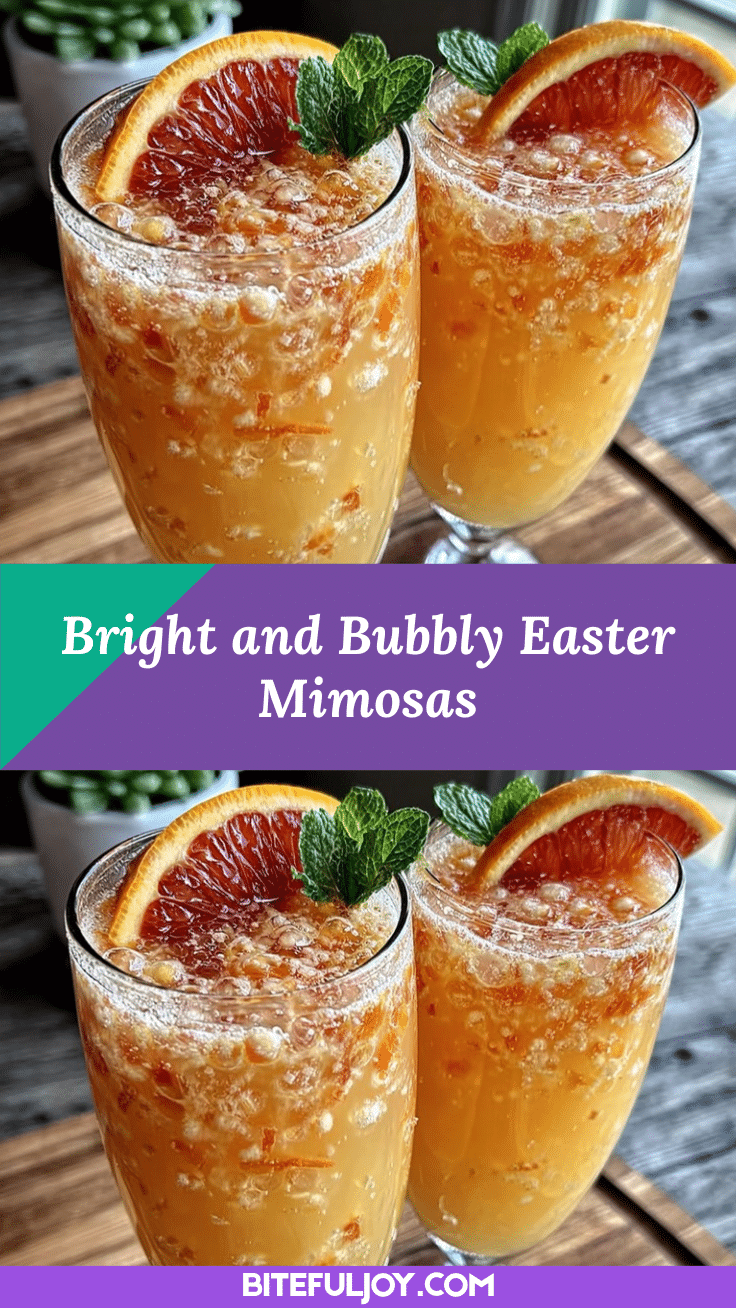
Refreshing Easter Mimosas

A bright, bubbly, and joyful mimosa recipe perfect for Easter brunch celebrations, featuring fresh orange juice, sparkling wine, and a homemade citrus simple syrup.
- Prep Time: 10 minutes
- Cook Time: 5 minutes
- Total Time: 45 minutes
- Yield: 6 servings 1x
- Category: Beverage
- Cuisine: American
Ingredients
- 2 cups (480 ml) fresh orange juice, freshly squeezed
- 1 bottle (750 ml) chilled sparkling wine or champagne, Brut or Extra Dry
- ½ cup (120 ml) sugar
- ½ cup (120 ml) water
- Zest of 1 orange
- Zest of 1 lemon
- Fresh orange slices, thinly sliced, for garnish
- Fresh mint sprigs, optional, for garnish
- Sparkling water or club soda, optional, for lightening or non-alcoholic version
- Alcohol-free sparkling wine or white grape juice, for mocktail variation
Instructions
- Make the citrus simple syrup: In a small saucepan, combine ½ cup sugar, ½ cup water, and the zest of one orange and one lemon. Heat over medium, stirring until sugar dissolves. Let it simmer gently for 2-3 minutes. Remove from heat and let cool completely.
- Juice the oranges to get about 2 cups of fresh orange juice. Strain if you prefer no pulp.
- In a large mixing pitcher, stir together the fresh orange juice and cooled citrus syrup. Taste and adjust sweetness if needed.
- Chill the mixture in the fridge for at least 30 minutes.
- Prepare the glasses by placing an orange slice and a sprig of fresh mint in each champagne flute.
- Fill each glass about halfway with the orange juice mixture. Slowly top with about 4 ounces (120 ml) of chilled sparkling wine per glass, pouring gently to preserve bubbles.
- Optional: For a lighter mimosa, add a splash of sparkling water. For a mocktail, replace sparkling wine with alcohol-free sparkling wine or white grape juice.
- Serve immediately to enjoy the fresh bubbles.
Notes
Pour sparkling wine slowly down the side of the glass to preserve bubbles. Use fresh orange juice for best flavor. The citrus simple syrup can be made ahead and stored in the fridge up to a week. Chill glasses and sparkling wine before serving. For non-alcoholic versions, substitute sparkling wine with sparkling water or alcohol-free sparkling grape juice.
Nutrition
- Serving Size: 1 glass (about 6 oun
- Calories: 135
- Sugar: 13
- Carbohydrates: 14
- Fiber: 0.5
Keywords: Easter mimosa, brunch drinks, sparkling wine cocktail, citrus simple syrup, fresh orange juice, non-alcoholic mimosa, holiday drinks