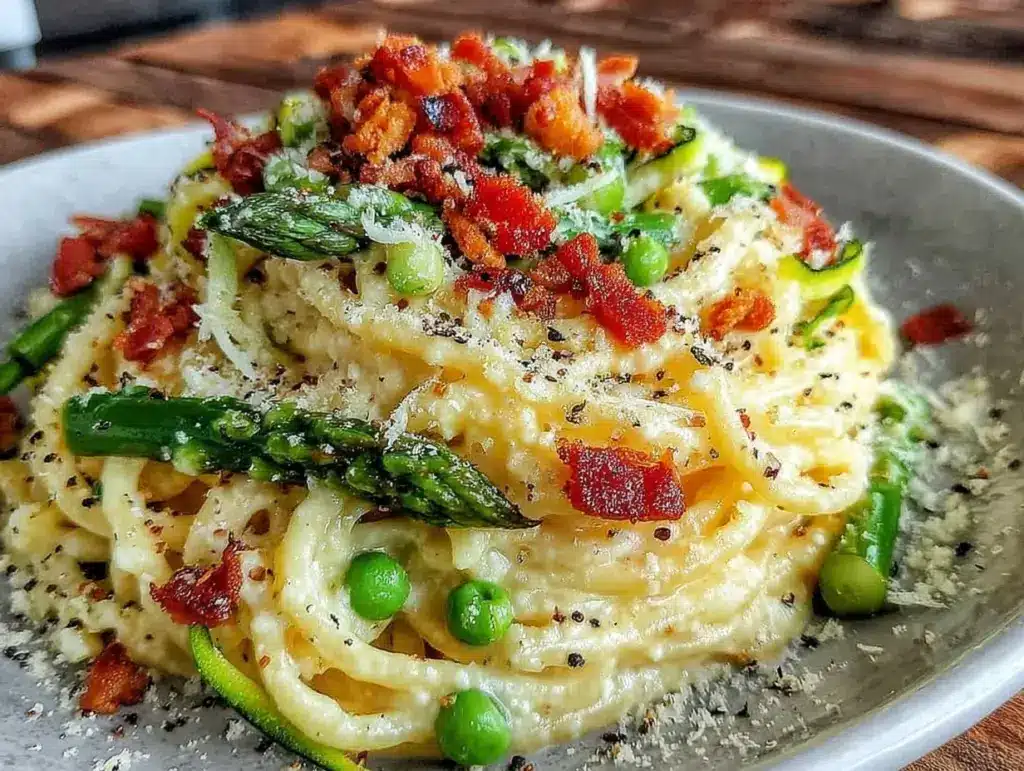
“You know, I wasn’t planning on making carbonara that Tuesday afternoon,” I confessed to my friend Janine as we sat around her cluttered kitchen table. The power had flickered just as I was prepping dinner, and in a scramble, I pulled out whatever spring veggies I had on hand—mainly asparagus and peas. Honestly, it was a last-minute rescue dinner that turned into one of those happy accidents you tell stories about.
The sizzle of asparagus hitting the hot pan was like music, and the creamy sauce came together just right, even though I’d forgotten the traditional pancetta at the store (whoops!). Maybe you’ve been there, rushing through your kitchen, juggling work calls and dinner, hoping a simple meal will come through. Well, this creamy spring vegetable carbonara with asparagus did just that for me—and it’s stuck around as a favorite ever since.
That cracked ceramic bowl I used still has a faint smudge of sauce, a little reminder of that chaotic evening. What makes this recipe special isn’t just the fresh, tender crunch of asparagus mingling with silky pasta; it’s the way simple ingredients combine to create something surprisingly comforting and satisfying. I keep coming back to it because it feels like a little spring celebration on a plate, even when the weather outside is still a bit gray.
Why You’ll Love This Creamy Spring Vegetable Carbonara with Asparagus
From my kitchen trials and countless tweaks, this creamy spring vegetable carbonara with asparagus stands out for a few reasons that make it a must-try:
- Quick & Easy: Whipped together in under 30 minutes, perfect for those busy weeknights when you just want a nourishing meal without fuss.
- Simple Ingredients: No need for exotic items—just pantry staples and fresh spring veggies you can find at your local market.
- Perfect for Spring: Celebrates seasonal asparagus and peas, bringing that bright, fresh flavor to your table.
- Crowd-Pleaser: Family-approved and friendly for picky eaters who might usually shy away from vegetables.
- Unbelievably Delicious: The creamy sauce balances the crispness of asparagus with a hint of Parmesan and garlic — comfort food, but light enough to enjoy in warmer weather.
This isn’t your typical carbonara. Instead of relying on the classic pancetta, the spring vegetables add a freshness that feels both indulgent and wholesome. Plus, the sauce is made creamy without heavy cream, using eggs and cheese to get that silky texture. Whether you’re impressing guests or just treating yourself after a long day, this recipe delivers a satisfying meal that feels both special and approachable.
What Ingredients You Will Need
This recipe uses simple, wholesome ingredients to deliver bold flavor and satisfying texture without the fuss. Most items are pantry staples, with the fresh asparagus and peas bringing that seasonal punch.
- For the Pasta and Sauce:
- 8 ounces (225 grams) spaghetti or fettuccine (I like Barilla brand for great texture)
- 3 large eggs, room temperature
- 1 cup (100 grams) freshly grated Parmesan cheese (or Pecorino Romano for a sharper bite)
- 2 cloves garlic, minced (adds aromatic depth)
- Salt and freshly ground black pepper, to taste
- For the Spring Vegetables:
- 1 bunch (about 1 pound / 450 grams) asparagus, trimmed and cut into 1-inch pieces (look for firm, bright green stalks)
- 1 cup (150 grams) fresh or frozen peas (thawed if frozen)
- 2 tablespoons olive oil (extra virgin for best flavor)
- Optional: a handful of fresh basil or parsley, chopped for garnish
Substitution tip: Use gluten-free pasta if needed, and swap Parmesan for a vegan cheese alternative to keep it dairy-free. If you like a bit of protein, diced cooked chicken or crispy pancetta can be added.
Equipment Needed
- Large pot for boiling pasta (a 6-quart pot works well to avoid sticking)
- Large skillet or sauté pan (at least 12 inches in diameter to cook veggies and toss pasta)
- Mixing bowl for whisking eggs and cheese
- Tongs or pasta fork for handling spaghetti
- Fine grater or microplane for cheese
- Colander to drain pasta
If you don’t have a microplane, a regular box grater works fine though the cheese may be a bit coarser. I’ve used both, and honestly, the microplane gives that melt-in-your-mouth texture faster. For budget-friendly options, a standard non-stick skillet does the job perfectly.
Preparation Method
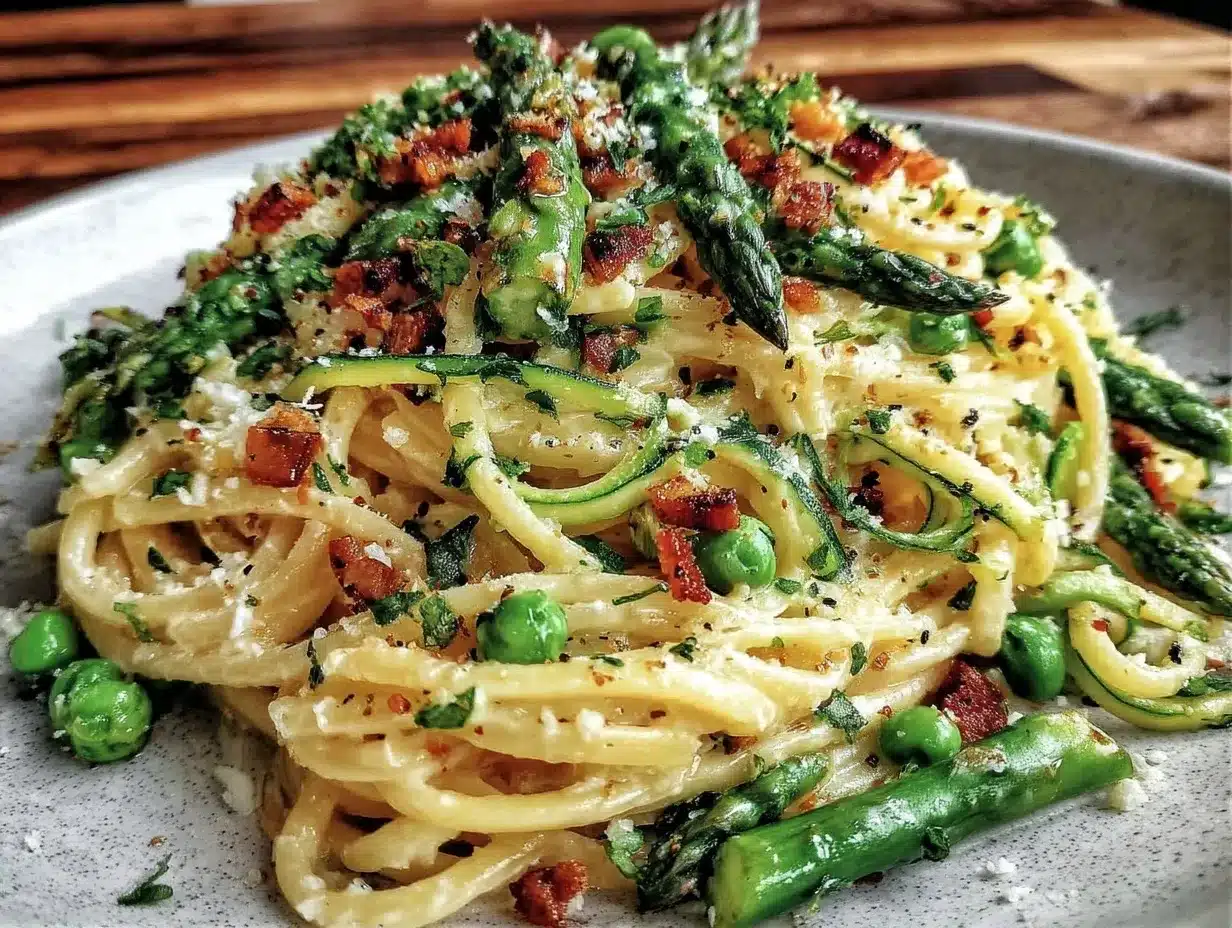
- Prep the Vegetables (10 minutes): Start by trimming the woody ends off your asparagus and cutting the stalks into 1-inch pieces. If using fresh peas, shell them now. Set aside.
- Cook the Pasta (8-10 minutes): Bring a large pot of salted water to a boil. Add the pasta and cook until al dente, according to package instructions (usually 8-10 minutes). Before draining, reserve about 1 cup (240 ml) of pasta cooking water and set aside. Drain the pasta but do not rinse.
- Sauté the Vegetables (5 minutes): While pasta cooks, heat 2 tablespoons olive oil in a large skillet over medium heat. Add minced garlic and cook until fragrant (about 30 seconds). Toss in asparagus and peas. Sauté until asparagus is tender-crisp and peas are bright green, about 3-4 minutes. Season lightly with salt and pepper.
- Prepare the Egg and Cheese Mixture (3 minutes): In a mixing bowl, whisk together the eggs and grated Parmesan until smooth. Add a pinch of black pepper. This will create the creamy sauce base.
- Combine Pasta and Veggies (2 minutes): Add the drained pasta directly to the skillet with vegetables. Toss to combine over low heat.
- Add the Egg Mixture (2 minutes): Remove the skillet from heat. Slowly pour in the egg and cheese mixture while tossing the pasta quickly to avoid scrambling the eggs. Add reserved pasta water a little at a time to loosen the sauce until it reaches a silky consistency that coats the pasta evenly.
- Final Seasoning and Serve: Taste and adjust salt and pepper as needed. If you like, sprinkle fresh basil or parsley over the top before serving. Serve immediately for the best creamy texture.
Tip: The key is to toss off the heat to prevent the eggs from turning into scrambled bits. If the sauce feels too thick, just add a splash of that reserved pasta water—it’s magic! Also, don’t leave the pasta sitting too long before adding the sauce, or it can dry out.
Cooking Tips & Techniques
Getting creamy carbonara right without cream can be tricky, but here’s what I’ve learned:
- Use room temperature eggs: Cold eggs added to hot pasta can scramble. Letting them warm slightly helps the sauce stay smooth.
- Reserve pasta water: This starchy water is your secret weapon for thinning the sauce just enough without watering it down.
- Work off the heat: Always toss the pasta and egg mixture off direct heat to avoid curdling.
- Sauté veggies crisp-tender: Overcooked asparagus gets mushy fast. Keep that slight snap for texture contrast.
- Freshly grated cheese: Pre-grated cheeses often contain anti-caking agents that affect melting. Grate your own for best results.
One time, I accidentally added the egg mixture while the pan was too hot, and I ended up with scrambled eggs in my pasta—lesson learned! Now, I always remove the skillet from heat first, then add the eggs slowly while tossing. Timing is everything here, and multitasking by prepping veggies during pasta cooking saves precious minutes.
Variations & Adaptations
This creamy spring vegetable carbonara with asparagus is a flexible recipe that you can tweak to your liking:
- Protein boost: Add crispy bacon, pancetta, or grilled chicken strips for a heartier meal.
- Vegetarian version: Keep it as is but add mushrooms or artichoke hearts for extra depth.
- Vegan adaptation: Use silken tofu blended with nutritional yeast and a little lemon juice to mimic cheese, and substitute pasta with chickpea or lentil-based varieties.
- Seasonal swap: In summer, replace peas with fresh fava beans or snap peas. In fall, try roasted butternut squash cubes.
- Alternative pasta: Use gluten-free pasta or spiralized zucchini noodles to lighten it up.
Once, I tried adding a splash of lemon zest and juice—it brought a fresh zing that balanced the richness beautifully. Feel free to experiment and find what suits your palate best.
Serving & Storage Suggestions
Serve this creamy spring vegetable carbonara hot, straight from the pan. It pairs wonderfully with a crisp green salad and a glass of chilled white wine or sparkling water with lemon.
For leftovers, store in an airtight container in the refrigerator for up to 2 days. Reheat gently on the stovetop over low heat, adding a splash of water or broth to loosen the sauce. Avoid microwaving at high power—it tends to dry out the pasta and scramble the eggs.
Flavors actually deepen if you let the dish rest an hour before serving (if you can wait that long!). Garnish with fresh herbs just before plating to keep that pop of color and freshness.
Nutritional Information & Benefits
This creamy spring vegetable carbonara with asparagus offers a nice balance of macronutrients:
- Calories per serving: approximately 450–500 kcal
- Protein: eggs and Parmesan provide a good protein boost
- Fats: healthy fats come from olive oil and cheese
- Carbohydrates: pasta offers energy, paired with fiber from asparagus and peas
Asparagus is a nutrient powerhouse—loaded with vitamins A, C, and K, plus folate and antioxidants. Peas add plant-based protein and fiber, which help keep you full longer. This recipe is naturally gluten-free if you choose the right pasta, and dairy-free versions are easy to make with substitutions.
I find this dish satisfying but not heavy, perfect when you want comfort food that doesn’t weigh you down.
Conclusion
Honestly, this creamy spring vegetable carbonara with asparagus has become my go-to for a quick, satisfying meal that feels special without the stress. Its balance of fresh veggies and silky sauce hits the spot whether you’re cooking for yourself or feeding friends.
Feel free to tweak the veggies or protein to suit your taste, and don’t be afraid to experiment with herbs or cheese types. I’d love to hear how you make it your own—drop a comment or share your favorite variations!
Remember, sometimes the best recipes come from those unexpected kitchen moments—so grab some asparagus and give this one a try. Your taste buds will thank you!
Frequently Asked Questions About Creamy Spring Vegetable Carbonara with Asparagus
Can I make this recipe ahead of time?
This dish is best enjoyed fresh, but you can prepare the pasta and veggies separately and combine them with the sauce just before serving. Leftovers keep well in the fridge for up to 2 days.
What if I don’t have fresh asparagus?
Frozen asparagus works in a pinch—just thaw and pat dry before sautéing to avoid extra moisture in the sauce.
Is it possible to make this carbonara without eggs?
The eggs create the creamy texture, but you can try a vegan sauce with blended silken tofu or cashew cream as a substitute, though it won’t be traditional.
How do I prevent the eggs from scrambling?
Remove the pan from heat before adding the egg mixture, and toss the pasta quickly while slowly pouring in the eggs. Adding reserved pasta water helps keep the sauce smooth.
Can I use other vegetables instead of asparagus and peas?
Absolutely! Zucchini, mushrooms, or snap peas make great alternatives depending on the season and your preference.
Pin This Recipe!
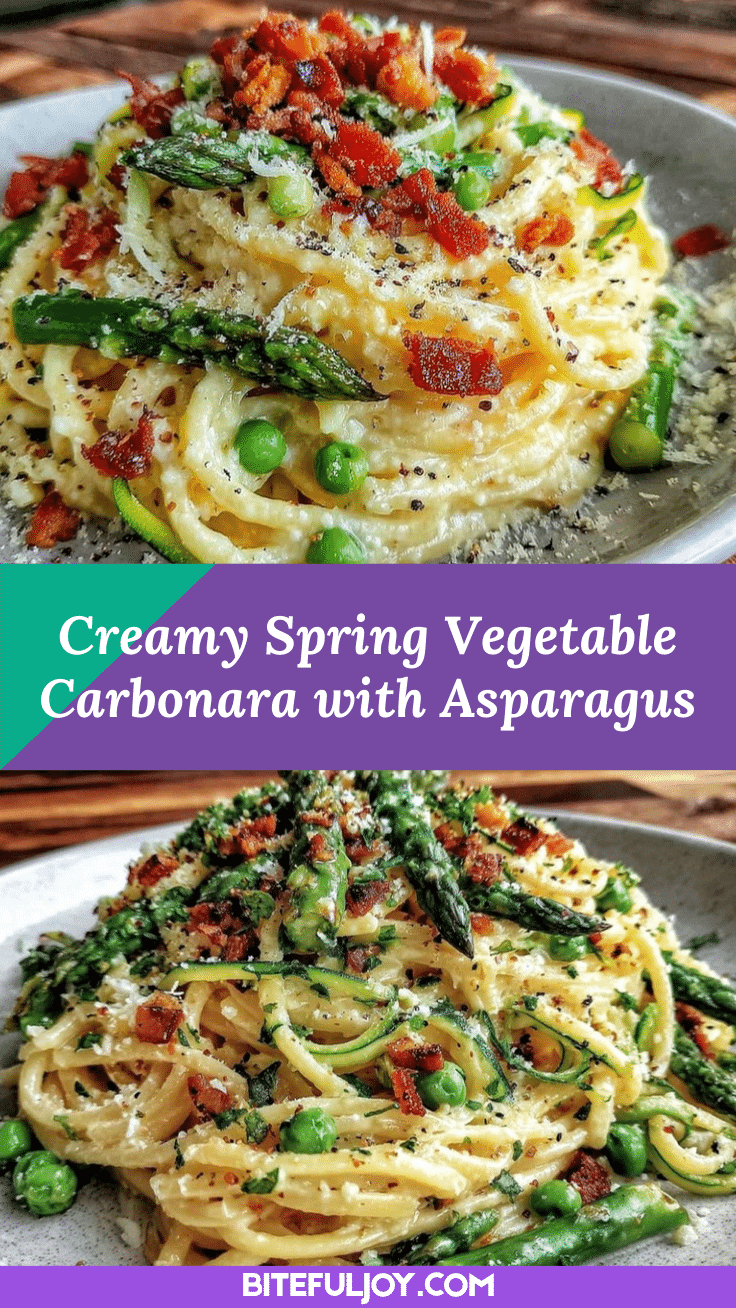
Creamy Spring Vegetable Carbonara with Asparagus

A quick and easy creamy carbonara featuring fresh spring vegetables like asparagus and peas, made without heavy cream for a light yet satisfying meal.
- Prep Time: 10 minutes
- Cook Time: 15 minutes
- Total Time: 25 minutes
- Yield: 4 servings 1x
- Category: Main Course
- Cuisine: Italian
Ingredients
- 8 ounces (225 grams) spaghetti or fettuccine
- 3 large eggs, room temperature
- 1 cup (100 grams) freshly grated Parmesan cheese or Pecorino Romano
- 2 cloves garlic, minced
- Salt and freshly ground black pepper, to taste
- 1 bunch (about 1 pound / 450 grams) asparagus, trimmed and cut into 1-inch pieces
- 1 cup (150 grams) fresh or frozen peas (thawed if frozen)
- 2 tablespoons olive oil (extra virgin)
- Optional: a handful of fresh basil or parsley, chopped for garnish
Instructions
- Prep the Vegetables (10 minutes): Trim woody ends off asparagus and cut into 1-inch pieces. Shell fresh peas if using. Set aside.
- Cook the Pasta (8-10 minutes): Bring a large pot of salted water to a boil. Add pasta and cook until al dente according to package instructions. Reserve 1 cup (240 ml) pasta cooking water before draining. Drain pasta but do not rinse.
- Sauté the Vegetables (5 minutes): Heat 2 tablespoons olive oil in a large skillet over medium heat. Add minced garlic and cook until fragrant (~30 seconds). Add asparagus and peas, sauté until asparagus is tender-crisp and peas are bright green (3-4 minutes). Season with salt and pepper.
- Prepare the Egg and Cheese Mixture (3 minutes): In a mixing bowl, whisk together eggs and grated Parmesan until smooth. Add a pinch of black pepper.
- Combine Pasta and Veggies (2 minutes): Add drained pasta to skillet with vegetables and toss to combine over low heat.
- Add the Egg Mixture (2 minutes): Remove skillet from heat. Slowly pour in egg and cheese mixture while tossing pasta quickly to avoid scrambling eggs. Add reserved pasta water gradually to loosen sauce to a silky consistency.
- Final Seasoning and Serve: Taste and adjust salt and pepper. Garnish with fresh basil or parsley if desired. Serve immediately.
Notes
Use room temperature eggs to prevent scrambling. Reserve pasta water to adjust sauce consistency. Toss pasta and egg mixture off heat to keep sauce smooth. Freshly grate cheese for best melting. Leftovers keep up to 2 days refrigerated; reheat gently on stovetop with splash of water or broth.
Nutrition
- Serving Size: 1 serving (about 1/4
- Calories: 475
- Sugar: 5
- Sodium: 350
- Fat: 18
- Saturated Fat: 6
- Carbohydrates: 55
- Fiber: 5
- Protein: 20
Keywords: carbonara, spring vegetables, asparagus, peas, creamy pasta, easy dinner, quick recipe, vegetarian option