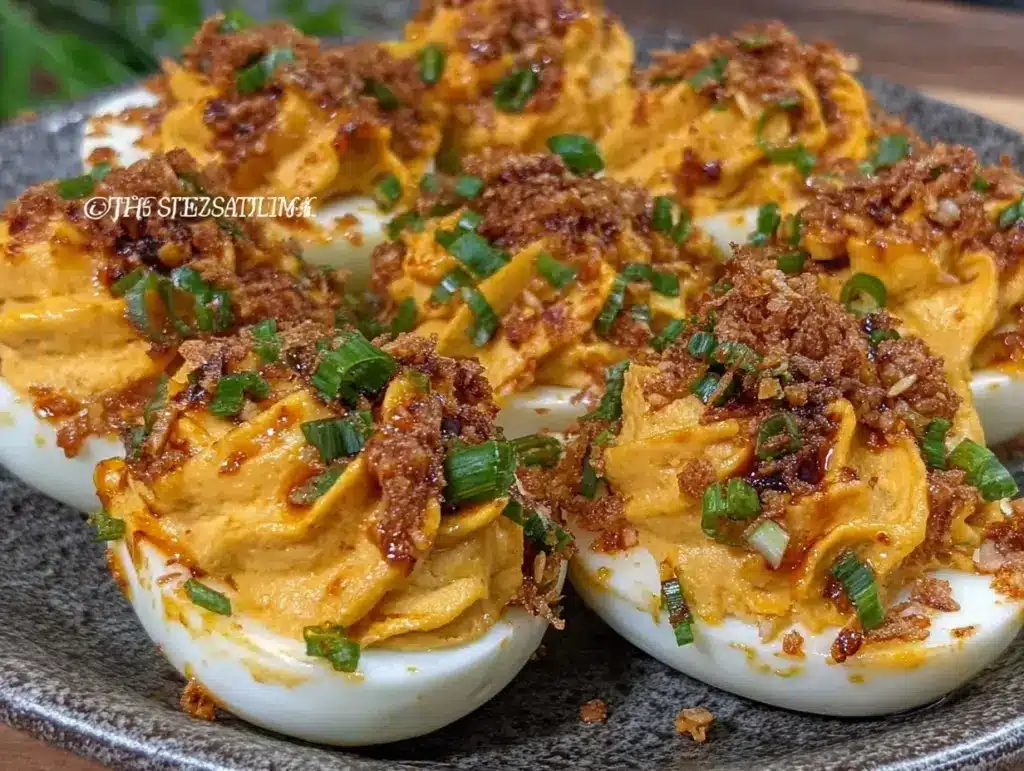
“You know that moment when a simple snack suddenly turns into the highlight of your party?” Well, that’s exactly what happened one Saturday afternoon when my friend Junho, who rarely cooks beyond instant noodles, handed me a small plate of these Korean gochujang deviled eggs with a crispy sesame crunch. I wasn’t expecting much—just some spicy eggs, right? But honestly, the first bite surprised me. The creamy yolk filling carried this perfect balance of heat and sweetness, while the toasted sesame bits added a delightful crunch that kept me reaching for more.
It all started on a lazy weekend when I was rummaging through my fridge, trying to whip up something quick before a video call. I had eggs, gochujang paste, and a few pantry staples. I figured, why not mix the idea of classic deviled eggs with a Korean twist? The kitchen got a little messy, I spilled some sesame seeds (of course!), and the timer dinged late. But when I finally tasted it, that combination of spicy, creamy, and crunchy flavors was a total game-changer.
Maybe you’ve been there too—wanting to jazz up a familiar recipe without fuss or fancy ingredients. These Korean gochujang deviled eggs do just that. They’re simple, bold, and addictive. Plus, they make a fantastic finger food for gatherings or a snack to treat yourself on a quiet evening. Honestly, once you try this recipe, you’ll probably find yourself making it again and again.
Why You’ll Love This Recipe
After testing this recipe multiple times (and yes, tasting way too many eggs in the process), I can confidently say these Korean gochujang deviled eggs with sesame crunch are something special. Here’s why they’ve earned a permanent spot in my snack rotation:
- Quick & Easy: Ready in under 30 minutes—perfect for those last-minute cravings or when guests drop by unexpectedly.
- Simple Ingredients: No specialty shopping needed; most items are pantry staples or easy to find at any grocery store.
- Perfect for Entertaining: Whether it’s a casual brunch or a weekend potluck, these eggs bring a unique flavor punch that stands out.
- Crowd-Pleaser: Even friends who claim they don’t like spicy food end up sneaking seconds (I’ve witnessed it firsthand!).
- Unbelievably Delicious: The creamy yolk filling, infused with the rich umami of gochujang, contrasts beautifully with the nutty sesame crunch—an irresistible combo.
This isn’t your typical deviled egg recipe. The secret lies in blending the gochujang just right—not too overpowering but enough to add a gentle heat and depth. The sesame crunch isn’t just a garnish; it gives a satisfying texture you don’t often get with deviled eggs. Trust me, this recipe has become my go-to when I want a snack that feels both comforting and exciting.
What Ingredients You Will Need
This recipe uses simple, wholesome ingredients to deliver bold flavor and satisfying texture without any fuss. Most of these are pantry staples, and the gochujang paste is the one ingredient that makes all the difference.
- Large eggs (6): Hard-boiled, peeled, and cooled for that creamy base.
- Gochujang (Korean chili paste) – 2 tablespoons: Adds the signature spicy-sweet kick. I prefer Chung Jung One brand for its balanced flavor.
- Mayonnaise – 3 tablespoons: For creaminess; use your favorite brand.
- Rice vinegar – 1 teaspoon: Gives a slight tang to balance richness.
- Sesame oil – 1 teaspoon: Adds that nutty aroma essential to the sesame crunch.
- Soy sauce – 1 teaspoon: For a touch of umami depth.
- Honey – 1 teaspoon: Softens the heat with subtle sweetness.
- Toasted sesame seeds – 2 tablespoons: The crunchy topping; lightly toasted at home or store-bought.
- Green onions (thinly sliced) – 1 tablespoon: For fresh color and mild sharpness.
- Salt and black pepper: To taste.
Substitution tips: If you want to keep it vegan, swap out the eggs for firm tofu and use vegan mayo. For a gluten-free option, make sure your soy sauce is tamari or a gluten-free variety. And if gochujang isn’t handy, a mix of chili paste with a touch of miso can mimic some of the flavor (but honestly, gochujang is worth having around!).
Equipment Needed
- Medium pot: For boiling eggs.
- Bowl of ice water: To cool eggs quickly and stop cooking.
- Mixing bowl: To combine yolks and seasonings.
- Fork or potato masher: For mashing yolks smoothly.
- Spoon or piping bag: To fill egg whites neatly. Piping bags make it look fancy, but a small spoon works just fine.
- Non-stick skillet or small pan: For toasting sesame seeds and green onions.
If you don’t have a piping bag, a small zip-top bag with a corner snipped off works wonders. Also, be sure to keep your eggs fresh for perfect peeling—older eggs peel easier, but fresh eggs taste better. I learned that the hard way after struggling with cracked whites one time!
Preparation Method
- Boil and cool the eggs (15 minutes): Place 6 large eggs in a medium pot and cover with cold water by about an inch (240 ml). Bring to a rolling boil over medium-high heat. Once boiling, turn off the heat and cover the pot. Let eggs rest for 12 minutes. Then transfer them to a bowl of ice water for 5 minutes to stop cooking and make peeling easier.
- Peel and halve the eggs (5 minutes): Carefully peel the eggs under running water to help remove shells smoothly. Slice each egg in half lengthwise and gently remove yolks, placing whites on a serving tray.
- Prepare the filling (10 minutes): Place the yolks in a mixing bowl. Mash them with a fork or potato masher until smooth. Add 2 tablespoons gochujang, 3 tablespoons mayonnaise, 1 teaspoon rice vinegar, 1 teaspoon sesame oil, 1 teaspoon soy sauce, and 1 teaspoon honey. Mix thoroughly until you get a creamy, smooth mixture. Taste and adjust salt or gochujang if you want it spicier.
- Make the sesame crunch (5 minutes): Heat a small non-stick skillet over medium heat. Add 2 tablespoons toasted sesame seeds and 1 tablespoon thinly sliced green onions. Toast for 1-2 minutes, stirring constantly, until fragrant and slightly crispy. Remove from heat and set aside.
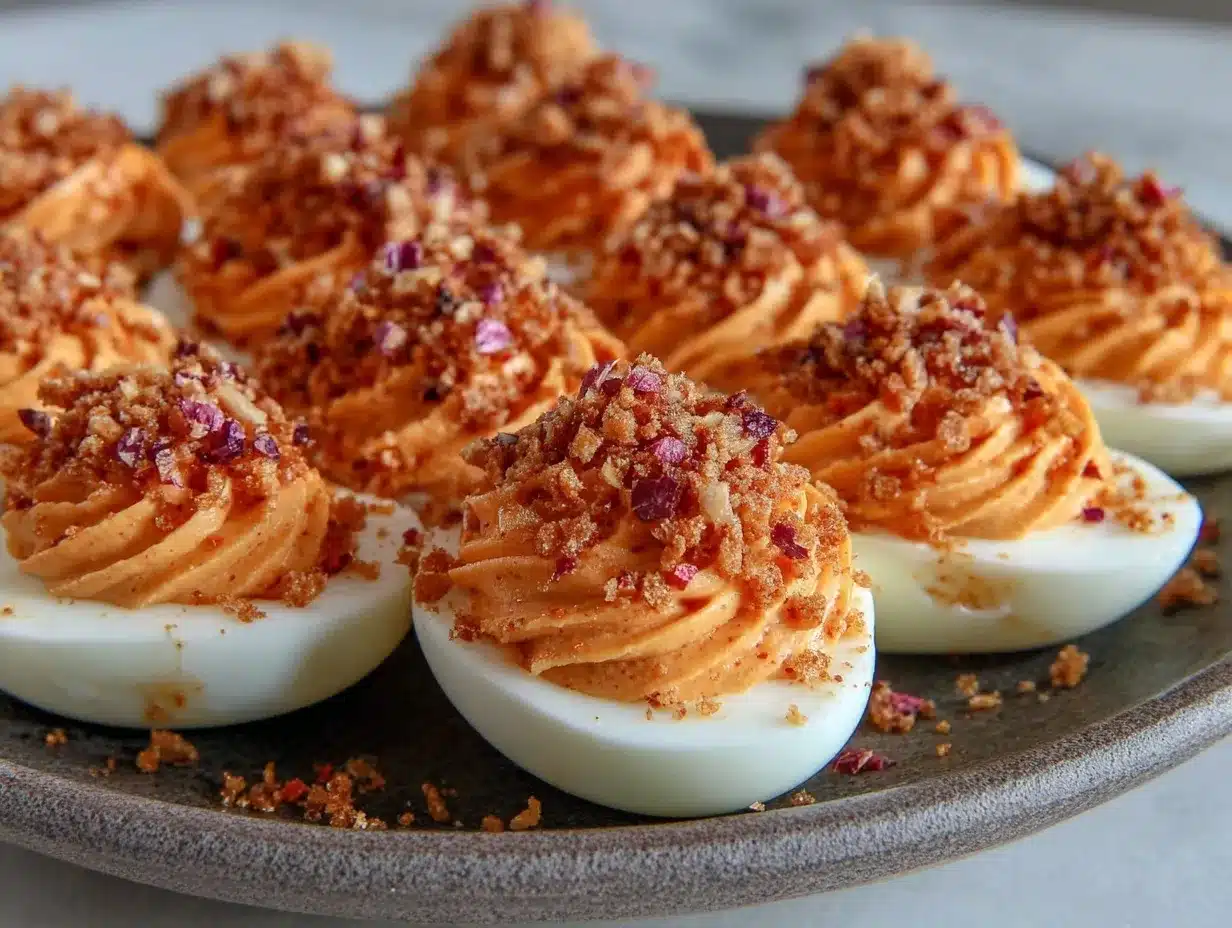
- Fill the egg whites (5 minutes): Spoon or pipe the yolk mixture back into the hollowed egg whites. Be generous with the filling for a satisfying bite.
- Top and serve: Sprinkle the toasted sesame and green onion crunch evenly over the filled eggs. Add a fresh grind of black pepper if desired. Serve immediately or chill for 15 minutes for flavors to meld.
Pro tip: If your filling feels too thick, add a little more mayo or a splash of rice vinegar to loosen it. Also, don’t skip the sesame crunch—it’s what takes these deviled eggs from ordinary to unforgettable.
Cooking Tips & Techniques
When making these Korean gochujang deviled eggs, a few tricks can help keep things smooth and flavorful. First, peeling eggs can be tricky—older eggs peel better, but fresh eggs taste best. To avoid frustration, dunk boiled eggs in ice water immediately; that chill helps separate the membrane for easier peeling.
Mixing the yolk filling requires balance. Gochujang can be spicy, so start with less and add more to suit your heat preference. Whisk the filling well to get a creamy, lump-free texture. Using a piping bag here isn’t just for show—piping makes the final presentation neat and lets you control portions better.
For the sesame crunch, don’t walk away while toasting seeds or green onions. Sesame seeds can burn quickly, turning bitter. Keep them moving in the pan for even toasting. I once left mine unattended for too long, and that smoky taste wasn’t pleasant!
Timing matters, too. Prepare the filling while the eggs cool to save time. And if you plan to make these ahead, keep the filling and egg whites separate until serving to prevent sogginess.
Variations & Adaptations
- Spicy Level: Adjust the gochujang amount or add a pinch of cayenne pepper for extra heat. For a milder version, mix in extra mayo or a dash of cream cheese.
- Crunch Variety: Swap sesame seeds for toasted chopped peanuts or crispy fried shallots for a different texture and flavor profile.
- Herbal Twist: Add finely chopped cilantro or shiso leaves into the yolk mixture for a fresh, herbal note that complements the spicy kick.
- Vegan Option: Use firm tofu mashed with vegan mayo and a bit of turmeric for color. Top with toasted sesame and green onions as usual.
- Serving Style: Instead of halved eggs, turn the filling into a spread served with toasted baguette slices for a party appetizer.
I once tried adding a splash of lime juice to the filling—it added a zesty brightness that was surprisingly delightful. Feel free to experiment, and remember, this recipe is flexible enough to handle your tweaks!
Serving & Storage Suggestions
These Korean gochujang deviled eggs are best served chilled or at room temperature. I like to plate them on a bright dish and sprinkle extra toasted sesame seeds and chopped green onions on top for that inviting look. They pair wonderfully with cold beers, sparkling water with lemon, or even a light white wine if you’re feeling fancy.
For storage, keep the filled eggs covered in an airtight container in the fridge. They stay fresh for up to 2 days, but honestly, they rarely last that long in my house. If you want to prep in advance, store the yolk filling separately and fill the whites just before serving to keep the texture crisp.
Reheat is not recommended, but if you want to take the chill off, let them sit out for 15 minutes before serving. The flavors mellow and meld beautifully over time, making them even more enjoyable.
Nutritional Information & Benefits
Each serving (2 deviled egg halves) contains roughly:
| Calories | 110 kcal |
|---|---|
| Protein | 6 grams |
| Fat | 9 grams |
| Carbohydrates | 2 grams |
| Fiber | 0.5 grams |
Eggs provide high-quality protein and essential nutrients like vitamin B12 and choline, supporting brain health. Gochujang contains fermented ingredients that can aid digestion, while sesame seeds offer healthy fats and antioxidants. This recipe is naturally gluten-free (confirm soy sauce choice) and low-carb, fitting nicely into many diets.
From a wellness perspective, these deviled eggs offer a satisfying snack that combines protein and healthy fats, helping curb cravings without a sugar crash. Plus, the spicy kick from gochujang can boost metabolism a bit, if you’re into that kind of thing.
Conclusion
Honestly, these Korean gochujang deviled eggs with sesame crunch are one of those recipes that make you rethink what a simple snack can be. They’re creamy, spicy, crunchy, and satisfyingly rich without being complicated. Whether you’re hosting a get-together or just craving a little something different, this recipe is easy to make and impressively tasty.
Feel free to customize the heat level or toppings to match your mood or pantry supplies. I keep coming back to this recipe because it’s reliable, fast, and a guaranteed crowd-pleaser. If you give it a try, let me know how you tweaked it or what your favorite variation was. And hey, share it with friends—good food is always better when it’s shared.
Happy cooking, and don’t forget to save some for yourself!
FAQs
Can I make these deviled eggs ahead of time?
Yes! Prepare the yolk filling and egg whites separately and combine them just before serving to keep the whites from getting soggy.
What if I don’t have gochujang paste?
You can substitute with a mixture of chili paste and a touch of miso paste, but the flavor won’t be quite the same. Gochujang is worth picking up if you enjoy Korean flavors.
How do I peel eggs easily without cracking the whites?
After boiling, immediately transfer eggs to an ice water bath for at least 5 minutes. Peel under running water to help separate the shell from the membrane.
Can I use a different oil instead of sesame oil?
You can, but sesame oil adds a distinctive nutty flavor that complements the gochujang. If unavailable, a mild vegetable oil works but the flavor will be less authentic.
Are these deviled eggs gluten-free?
They can be, as long as you use gluten-free soy sauce or tamari. Most other ingredients are naturally gluten-free.
Pin This Recipe!
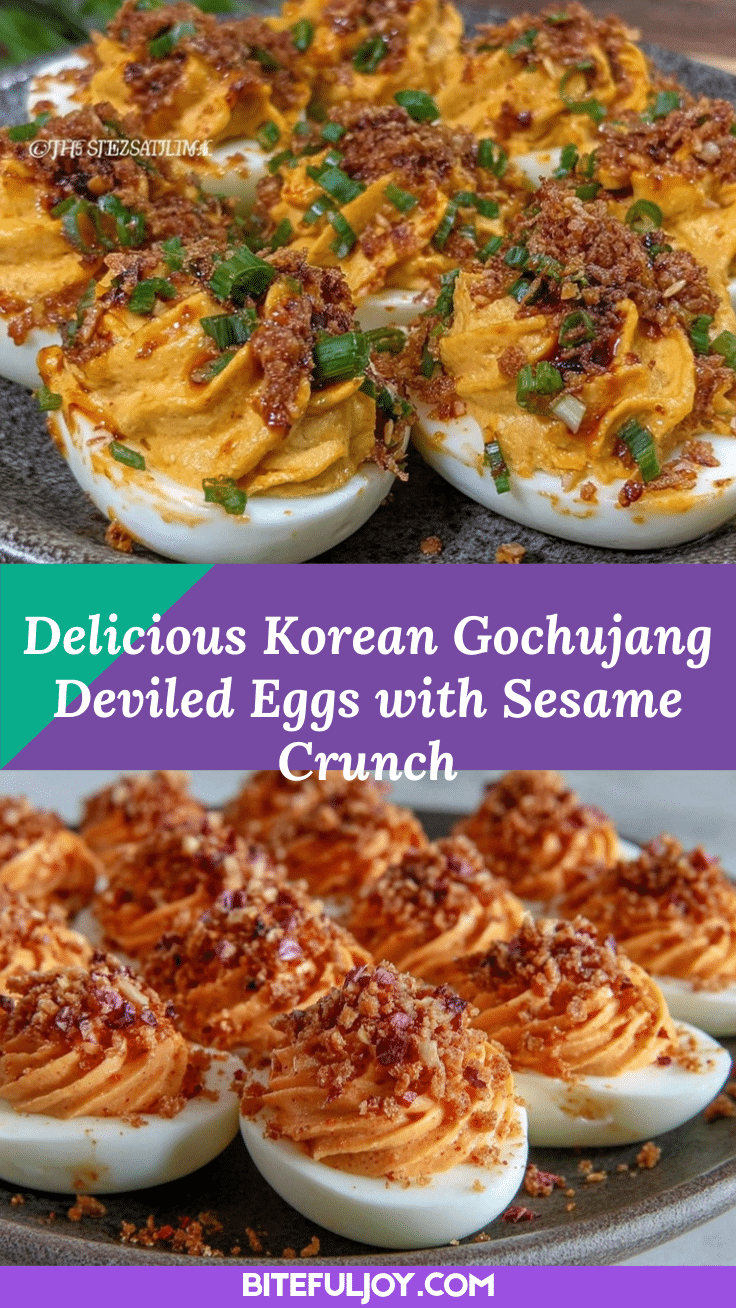
Delicious Korean Gochujang Deviled Eggs Recipe with Easy Sesame Crunch

These Korean gochujang deviled eggs combine a creamy, spicy yolk filling with a crunchy toasted sesame topping, making a quick and addictive snack perfect for gatherings or casual snacking.
- Prep Time: 10 minutes
- Cook Time: 15 minutes
- Total Time: 30 minutes
- Yield: 6 servings (12 deviled egg halves) 1x
- Category: Appetizer
- Cuisine: Korean
Ingredients
- 6 large eggs, hard-boiled, peeled, and cooled
- 2 tablespoons gochujang (Korean chili paste)
- 3 tablespoons mayonnaise
- 1 teaspoon rice vinegar
- 1 teaspoon sesame oil
- 1 teaspoon soy sauce
- 1 teaspoon honey
- 2 tablespoons toasted sesame seeds
- 1 tablespoon thinly sliced green onions
- Salt and black pepper, to taste
Instructions
- Place 6 large eggs in a medium pot and cover with cold water by about an inch (240 ml). Bring to a rolling boil over medium-high heat. Once boiling, turn off the heat and cover the pot. Let eggs rest for 12 minutes.
- Transfer eggs to a bowl of ice water for 5 minutes to stop cooking and make peeling easier.
- Carefully peel the eggs under running water to help remove shells smoothly. Slice each egg in half lengthwise and gently remove yolks, placing whites on a serving tray.
- Place the yolks in a mixing bowl. Mash them with a fork or potato masher until smooth.
- Add 2 tablespoons gochujang, 3 tablespoons mayonnaise, 1 teaspoon rice vinegar, 1 teaspoon sesame oil, 1 teaspoon soy sauce, and 1 teaspoon honey to the mashed yolks. Mix thoroughly until creamy and smooth. Adjust salt or gochujang to taste.
- Heat a small non-stick skillet over medium heat. Add 2 tablespoons toasted sesame seeds and 1 tablespoon thinly sliced green onions. Toast for 1-2 minutes, stirring constantly, until fragrant and slightly crispy. Remove from heat and set aside.
- Spoon or pipe the yolk mixture back into the hollowed egg whites generously.
- Sprinkle the toasted sesame and green onion crunch evenly over the filled eggs. Add a fresh grind of black pepper if desired.
- Serve immediately or chill for 15 minutes for flavors to meld.
Notes
If the filling is too thick, add more mayonnaise or a splash of rice vinegar to loosen it. Use a piping bag for neat presentation. Toast sesame seeds and green onions carefully to avoid burning. For vegan option, substitute eggs with firm tofu and use vegan mayo. Use tamari or gluten-free soy sauce for gluten-free version.
Nutrition
- Serving Size: 2 deviled egg halves
- Calories: 110
- Fat: 9
- Carbohydrates: 2
- Fiber: 0.5
- Protein: 6
Keywords: deviled eggs, gochujang, Korean recipe, spicy eggs, sesame crunch, appetizer, snack, party food