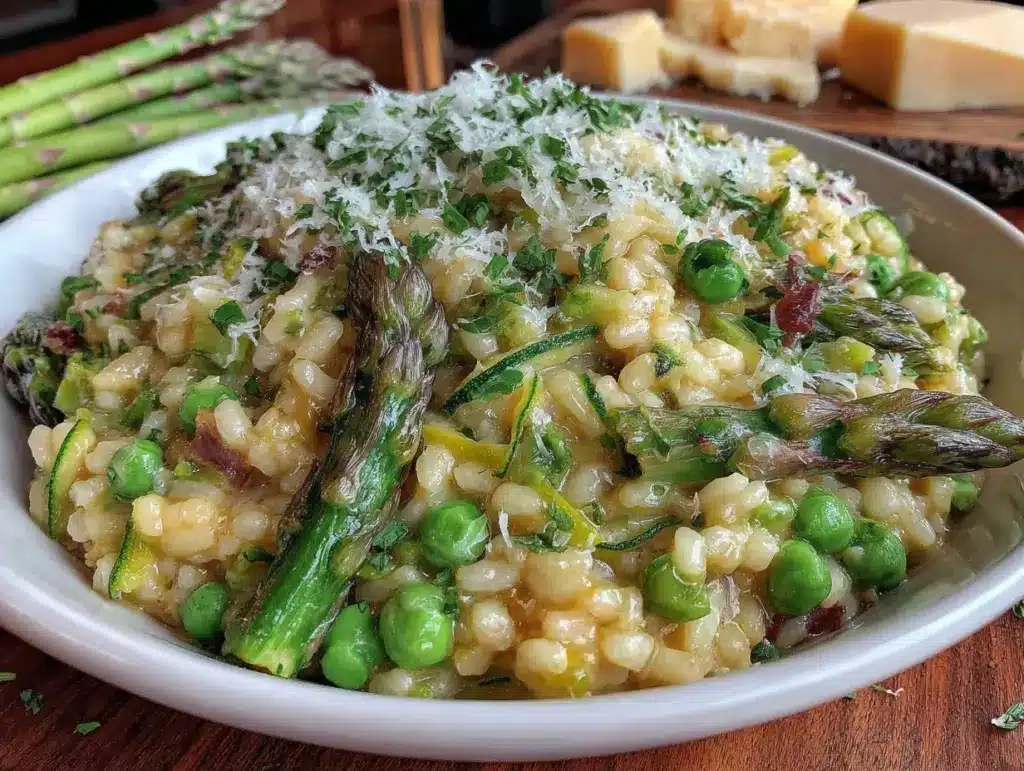
“You have to try this risotto,” my neighbor Barbara insisted one bright Saturday morning. I was there to borrow her ladder, but instead, I found myself drawn to the gentle simmering sound from her kitchen and the vibrant mix of green peas, asparagus, and fresh herbs filling the air. Honestly, I wasn’t expecting much—I’d always thought risotto was a bit intimidating and reserved for fancy dinners. But Barbara, who’s known for her no-fuss approach, whipped up this creamy spring vegetable risotto with parmesan as if it were the easiest thing in the world. She even cracked a bowl mid-prep when her cat jumped onto the counter, but she didn’t miss a beat.
That day, I learned risotto doesn’t have to be a complicated ordeal. It can be a comforting, bright, and surprisingly simple dish that celebrates the fresh flavors of spring vegetables. Maybe you’ve been there—wanting something elegant but not wanting to spend hours in the kitchen. This recipe stuck with me because it’s just that kind of dish. Every time I make it, I’m reminded of that warm Saturday morning, the clinking of pots, and the kind of meal that feels homemade yet a bit special.
Let me tell you, this creamy spring vegetable risotto with parmesan has become my go-to for impressing friends without the stress. The way the parmesan melts into the rice, mingling with tender asparagus tips and sweet peas, it’s the sort of meal that invites you to slow down and savor. And hey, if Barbara can make it while dealing with a curious cat, so can you.
Why You’ll Love This Creamy Spring Vegetable Risotto with Parmesan
This creamy spring vegetable risotto with parmesan is not just another rice dish—it’s a blend of comfort and freshness that really shines in the spring. I’ve tested this recipe multiple times, refining every step to make sure it’s as approachable as it is delicious. Here’s why you’ll want to keep it in your recipe box:
- Quick & Easy: Ready in about 40 minutes, perfect for busy weeknights when you want something cozy but don’t want to fuss endlessly.
- Simple Ingredients: Uses pantry staples like arborio rice and parmesan, plus fresh spring vegetables you can find at your local market or even frozen peas if you’re in a pinch.
- Perfect for Seasonal Celebrations: Ideal for spring brunches, light dinners, or even as a side dish at a potluck.
- Crowd-Pleaser: The creamy texture and bright veggie flavors always get compliments from kids and adults alike.
- Unbelievably Delicious: The parmesan adds a rich, savory depth, while the vegetables keep it fresh and satisfying.
What sets this recipe apart? It’s all about the balance—the slow cooking of the rice to achieve that velvety, almost buttery texture, paired with the crisp-tender spring vegetables that add bursts of color and flavor. Plus, I’ve included a subtle tip toasting the rice before adding broth, which gives the risotto a gentle nutty edge. Honestly, it’s the kind of dish that makes you close your eyes after the first bite and just savor the moment.
What Ingredients You Will Need
This recipe uses simple, wholesome ingredients to deliver bold flavor and a satisfying texture without the fuss. Most of these you probably have in your kitchen already, and the fresh veggies bring in that seasonal brightness.
- Arborio rice: 1½ cups (300 g) – the star for creamy risotto texture.
- Vegetable broth: About 5 cups (1.2 liters), kept warm – I recommend a low-sodium broth for better control over the seasoning.
- Unsalted butter: 3 tablespoons (about 42 g), divided – adds richness without overpowering.
- Olive oil: 2 tablespoons (30 ml) – for sautéing vegetables and rice.
- Shallots: 2 medium, finely chopped – brings a mild sweetness.
- Garlic cloves: 2, minced – for that subtle aromatic boost.
- Asparagus: 1 bunch (about 12 oz or 350 g), trimmed and cut into 1-inch pieces – fresh and tender.
- Fresh or frozen peas: 1 cup (150 g) – sweet pop of flavor.
- Fresh parsley: 2 tablespoons, chopped – bright herbaceous note.
- Parmesan cheese: ¾ cup (75 g), freshly grated – quality matters here; I usually go for Parmigiano-Reggiano.
- White wine: ½ cup (120 ml), dry (optional) – adds acidity and depth (I sometimes skip it if I’m out).
- Salt and black pepper: To taste – freshly ground pepper makes a difference.
Substitution tip: If you want a dairy-free version, swap the butter for a plant-based spread and use nutritional yeast instead of parmesan. For a gluten-free option, just double-check your broth ingredients.
Equipment Needed
- Large heavy-bottomed skillet or sauté pan: Ideally 12 inches (30 cm), to allow even cooking and stirring space.
- Medium saucepan: To keep your vegetable broth warm—this helps the rice cook evenly.
- Wooden spoon or silicone spatula: For stirring the risotto without scratching your pan.
- Measuring cups and spoons: For precise ingredient amounts.
- Chef’s knife and cutting board: For prepping your vegetables.
If you don’t have a heavy-bottomed pan, a sturdy stainless steel skillet will do. I’ve tried making risotto in non-stick pans before, but I find that a heavier pan helps prevent sticking and creates better texture. Also, keeping the broth warm is key—cold broth slows down cooking and can make the risotto gluey. A simple budget-friendly tip: just use a small saucepan on low heat and keep it covered.
Preparation Method
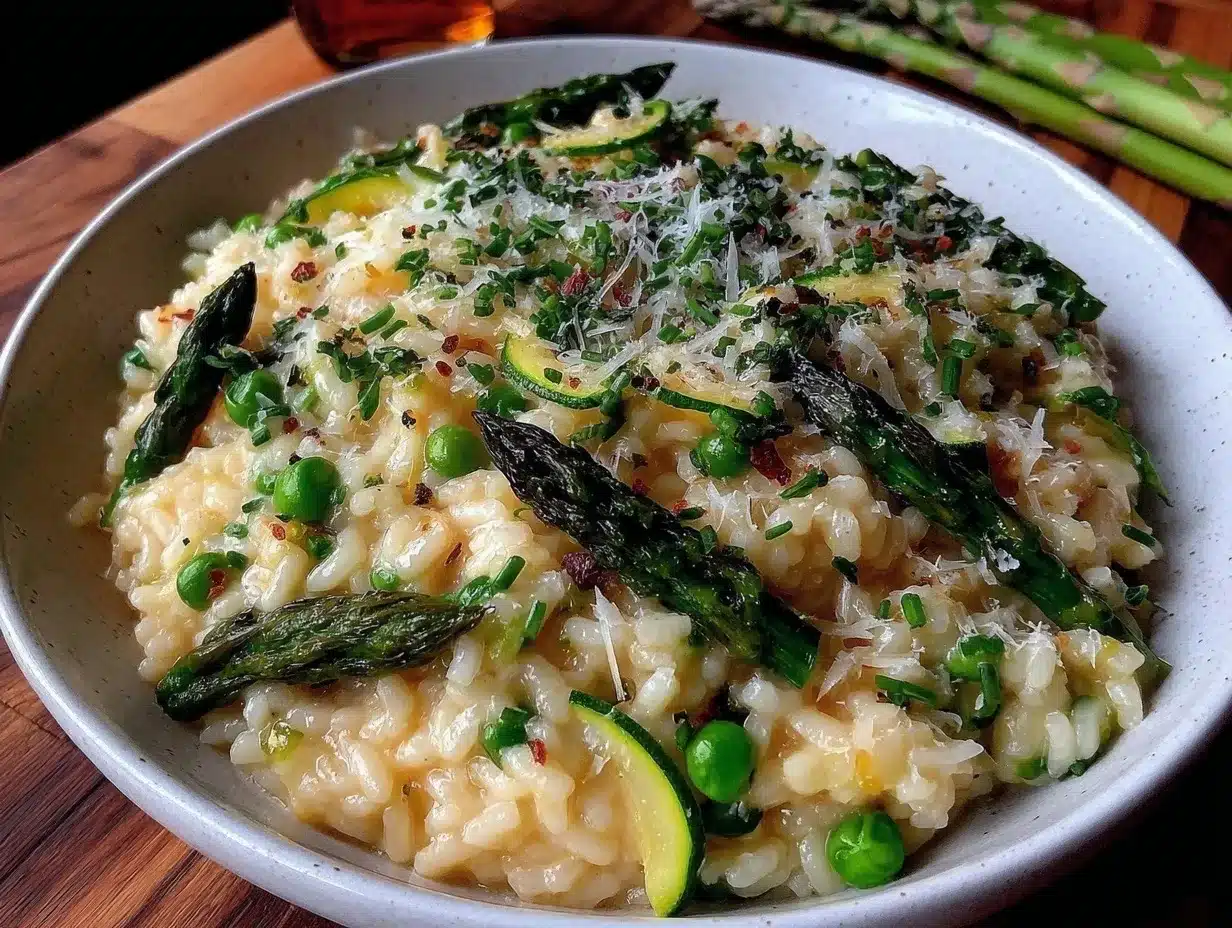
- Warm the broth: Pour your vegetable broth into a medium saucepan and keep it on low heat to stay warm throughout the cooking process (about 5 minutes prep).
- Sauté the aromatics: In your large skillet, heat 1 tablespoon of olive oil and 1 tablespoon of butter over medium heat. Add the chopped shallots and cook for 3-4 minutes until translucent but not browned. Stir in the minced garlic and cook for an additional 30 seconds until fragrant.
- Toast the rice: Add the arborio rice to the skillet and stir to coat the grains with the butter and oil. Cook for 2-3 minutes, stirring frequently, until the edges of the rice become translucent and the grains have a slight nutty aroma. This step really makes a difference in flavor.
- Deglaze with wine (optional): Pour in the white wine and stir continuously until it’s mostly absorbed, about 2-3 minutes. If you’re skipping wine, just proceed to the next step.
- Add the broth gradually: Begin adding warm broth one ladle (about ½ cup or 120 ml) at a time, stirring gently but consistently. Wait until the liquid is mostly absorbed before adding the next ladle. This slow addition helps release the rice’s starch and creates that creamy texture. This step will take about 20-25 minutes.
- Prepare the vegetables: While the rice cooks, steam or blanch the asparagus pieces until just tender-crisp (about 3 minutes), then rinse under cold water to stop cooking. If using frozen peas, no need to cook separately.
- Incorporate vegetables: When you have about 5 minutes left of cooking the rice (after about 15 minutes of broth additions), stir in the asparagus and peas. Continue adding broth and stirring until the rice is al dente—tender with a slight bite.
- Finish with butter and parmesan: Remove the skillet from heat and stir in the remaining 2 tablespoons of butter and all the grated parmesan cheese. Add chopped parsley, and season with salt and pepper to taste. The risotto should be creamy and glossy, not dry or sticky.
- Serve immediately: Risotto waits for no one! Spoon onto warmed plates and garnish with extra parmesan or a few parsley leaves if you like.
Quick tip: If your risotto becomes too thick before serving, stir in a splash of warm broth or water to loosen it up. Also, don’t rush the stirring—it’s the gentle coaxing of the starch that creates that signature creaminess.
Cooking Tips & Techniques for Perfect Risotto
Honestly, risotto can seem intimidating, but with a bit of patience and these tips, you’ll get it right every time.
- Keep broth warm: Adding cold broth shocks the rice and slows cooking, making the texture uneven.
- Stir consistently but gently: This helps release starch without breaking the grains. I usually stir in a slow, rhythmic motion—kind of meditative once you get into the groove.
- Don’t walk away: Risotto needs attention. I’ve made the mistake of getting distracted and ended up with unevenly cooked rice.
- Use quality ingredients: Good parmesan and fresh vegetables make a huge difference. I’ve tried generic parmesan, and it just doesn’t melt into the risotto the same way.
- Watch your seasoning: Since parmesan is salty, add salt gradually and taste as you go.
- Adjust liquid if needed: Depending on your stove and pan, you might need a tiny bit more or less broth. The risotto should be creamy but not soupy.
One time, I accidentally added all the broth at once because I got interrupted by a phone call. The risotto ended up a bit mushy but still tasty, so if you’re in a pinch, it’s not the end of the world. Still, the slow broth addition method really does produce the best texture.
Variations & Adaptations
This creamy spring vegetable risotto with parmesan is a great base you can play with depending on your mood or dietary needs.
- Seasonal swap: In summer, swap asparagus and peas for fresh corn kernels and cherry tomatoes for a sweet, juicy twist.
- Vegan version: Use vegetable broth, substitute butter with vegan margarine, and replace parmesan with nutritional yeast or vegan cheese shreds.
- Protein add-in: Stir in cooked shrimp or grilled chicken pieces during the last few minutes for a heartier meal.
- Different grains: For a twist, try using pearl barley or farro instead of arborio rice, but note cooking times will vary.
- Herb variations: Swap parsley for fresh basil or tarragon for a different herbal note.
Personally, I tried adding lemon zest and a splash of lemon juice at the end once, and it brought a bright lift that was delightful on a warm spring evening.
Serving & Storage Suggestions
Risotto is best enjoyed fresh and warm—the creamy texture is at its peak right off the stove. Serve it on warmed plates to keep it cozy longer. A sprinkle of extra parmesan or a drizzle of good olive oil right before serving adds a nice finishing touch.
This risotto pairs wonderfully with a crisp white wine like Pinot Grigio or a light salad for a balanced meal. If you want a side, roasted chicken or grilled fish complements the dish beautifully.
Got leftovers? Store risotto in an airtight container in the refrigerator for up to 2 days. When reheating, add a splash of broth or water and gently warm it in a pan over low heat, stirring to bring back creaminess. Microwave reheats okay but can dry it out if you’re not careful.
Flavors tend to deepen overnight, so if you make it ahead, the risotto will taste even richer the next day.
Nutritional Information & Benefits
This creamy spring vegetable risotto with parmesan offers a comforting yet balanced meal option. Here’s an estimated breakdown per serving (serves 4):
| Nutrient | Amount |
|---|---|
| Calories | ~380 kcal |
| Protein | 12 g |
| Carbohydrates | 55 g |
| Fat | 10 g |
| Fiber | 4 g |
The asparagus and peas add fiber, vitamins A and C, plus antioxidants, while the parmesan provides a good dose of calcium and protein. Arborio rice is a source of energy-rich carbs, and the dish remains gluten-free as long as you use gluten-free broth. For those watching sodium, opt for low-sodium broth varieties and adjust added salt accordingly.
From a wellness perspective, this risotto feels nourishing and satisfying without being heavy, making it a great choice for lighter spring meals.
Conclusion
So, why give this creamy spring vegetable risotto with parmesan a try? Because it’s a wonderful balance of creamy, fresh, and savory that feels both special and approachable. You can tweak it to your taste, add your favorite veggies, or even sneak in some protein if you like. I love this recipe because it reminds me of simple pleasures—good food, good company, and the joy of cooking something that’s both comforting and fresh.
If you make it, I’d love to hear how you personalized it. Did you add lemon zest, switch up the veggies, or try it vegan? Drop a comment below or share your photos—let’s keep the kitchen conversation going. Happy cooking, and remember: sometimes the best dishes come from unexpected moments and a little kitchen curiosity.
FAQs about Creamy Spring Vegetable Risotto with Parmesan
Can I make this risotto ahead of time?
You can prepare it a few hours ahead, but risotto is best served fresh. If you do make it early, store it in the fridge and reheat gently with a splash of broth.
What if I don’t have arborio rice?
Arborio rice is ideal for its starch content, but you can use other short-grain rice like Carnaroli or Vialone Nano if available. Long-grain rice won’t give the same creaminess.
Can I use water instead of vegetable broth?
Water can work but broth adds flavor depth. If using water, consider adding extra seasoning or a splash of soy sauce for umami.
How do I know when the risotto is done?
The rice should be tender but still have a slight bite (al dente). The texture should be creamy and not dry or mushy—taste-testing is key here.
Is it okay to freeze leftover risotto?
Freezing risotto is generally not recommended as the texture can change upon thawing. It’s best to enjoy leftovers within 2 days refrigerated.
Pin This Recipe!
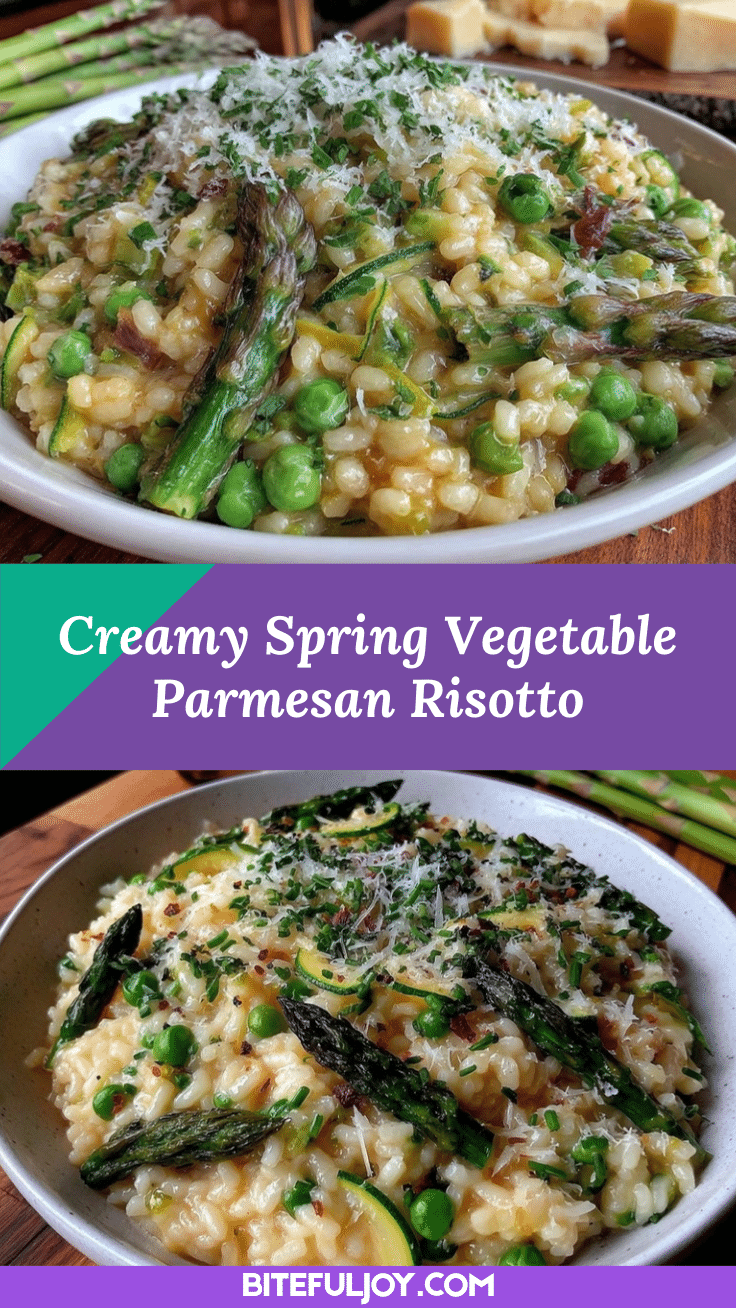
Creamy Spring Vegetable Risotto with Parmesan

A comforting and fresh risotto featuring tender asparagus, sweet peas, and rich parmesan cheese, perfect for spring meals and easy to prepare in about 40 minutes.
- Prep Time: 10 minutes
- Cook Time: 30 minutes
- Total Time: 40 minutes
- Yield: 4 servings 1x
- Category: Main Course
- Cuisine: Italian
Ingredients
- 1½ cups (300 g) arborio rice
- About 5 cups (1.2 liters) vegetable broth, kept warm
- 3 tablespoons (about 42 g) unsalted butter, divided
- 2 tablespoons (30 ml) olive oil
- 2 medium shallots, finely chopped
- 2 garlic cloves, minced
- 1 bunch (about 12 oz or 350 g) asparagus, trimmed and cut into 1-inch pieces
- 1 cup (150 g) fresh or frozen peas
- 2 tablespoons fresh parsley, chopped
- ¾ cup (75 g) freshly grated parmesan cheese
- ½ cup (120 ml) dry white wine (optional)
- Salt and black pepper to taste
Instructions
- Warm the vegetable broth in a medium saucepan over low heat and keep it warm throughout cooking.
- In a large heavy-bottomed skillet, heat 1 tablespoon olive oil and 1 tablespoon butter over medium heat. Add chopped shallots and cook for 3-4 minutes until translucent.
- Stir in minced garlic and cook for 30 seconds until fragrant.
- Add arborio rice to the skillet and stir to coat with butter and oil. Cook for 2-3 minutes until rice edges become translucent and grains emit a nutty aroma.
- Pour in white wine (if using) and stir continuously until mostly absorbed, about 2-3 minutes.
- Add warm broth gradually, about ½ cup (120 ml) at a time, stirring gently and waiting until liquid is mostly absorbed before adding more. Continue for 20-25 minutes.
- While rice cooks, steam or blanch asparagus pieces until tender-crisp (about 3 minutes), then rinse under cold water. No need to cook peas if frozen.
- When about 5 minutes of cooking remain, stir in asparagus and peas. Continue adding broth and stirring until rice is al dente and creamy.
- Remove skillet from heat and stir in remaining 2 tablespoons butter and all grated parmesan cheese.
- Add chopped parsley and season with salt and black pepper to taste.
- Serve immediately on warmed plates, garnished with extra parmesan or parsley if desired.
Notes
Keep broth warm to ensure even cooking and creamy texture. Stir gently and consistently to release starch without breaking rice grains. Add salt gradually as parmesan is salty. If risotto thickens too much before serving, loosen with a splash of warm broth or water. Risotto is best served fresh but can be stored refrigerated for up to 2 days and reheated gently with broth.
Nutrition
- Serving Size: 1 serving (about 1 c
- Calories: 380
- Sugar: 3
- Sodium: 400
- Fat: 10
- Saturated Fat: 6
- Carbohydrates: 55
- Fiber: 4
- Protein: 12
Keywords: risotto, spring vegetables, asparagus, peas, parmesan, creamy risotto, easy risotto recipe, vegetarian risotto, Italian rice dish